Hoyt Arboretum
Know Before You Go
- 4000 SW Fairview Blvd, Portland, Oregon 97221
- Hours: Open [[park_hours]]
Visitor Center: Open [[hoyt_visitor_hours]] - Cost: The Arboretum is always free to visit. Many programs are free, and some events and classes are fee-based.
- hoytarboretum.org
- 503-865-8733
Visit Hoyt Arboretum's Recent Updates page for updates or closures related to events or maintenance.
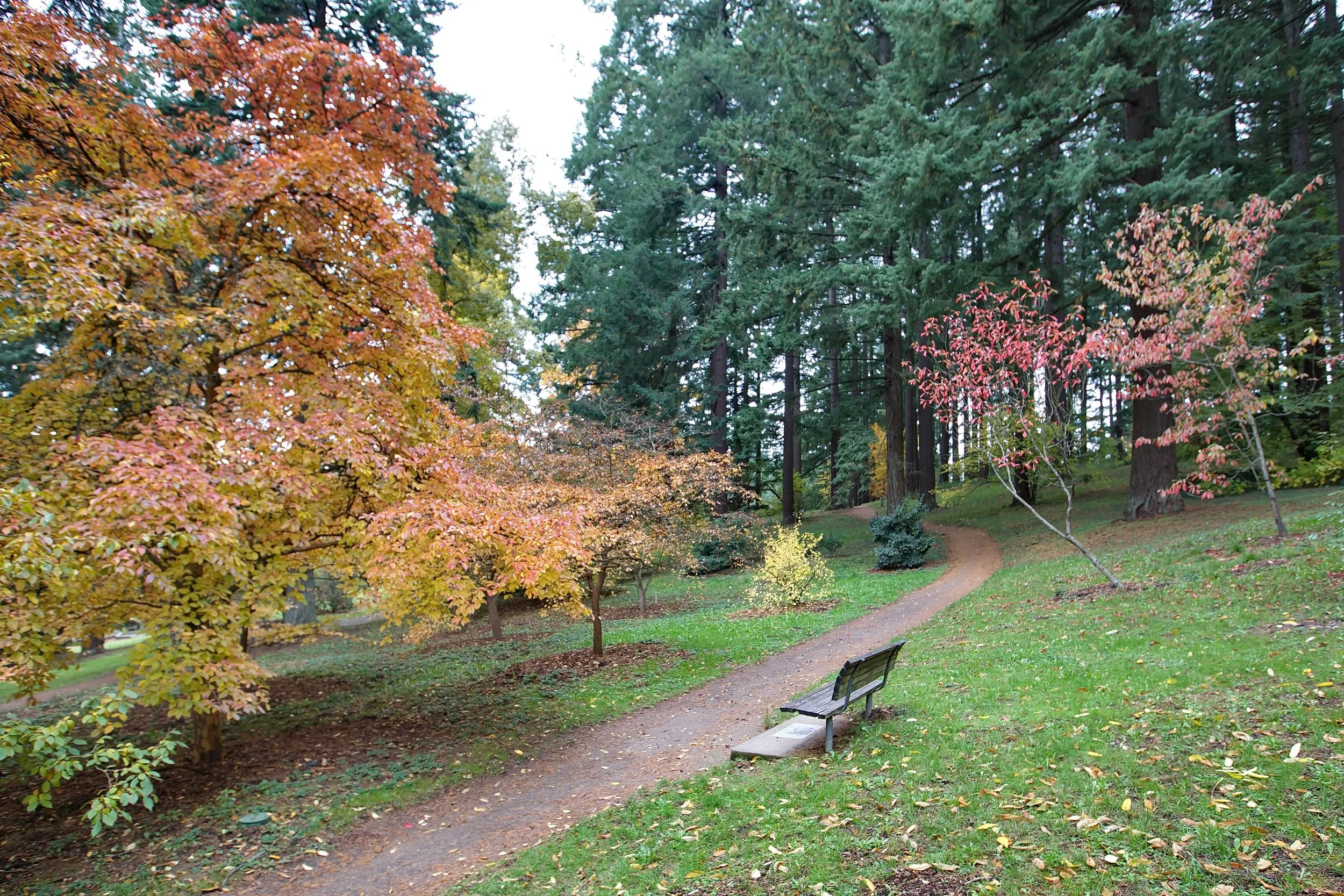
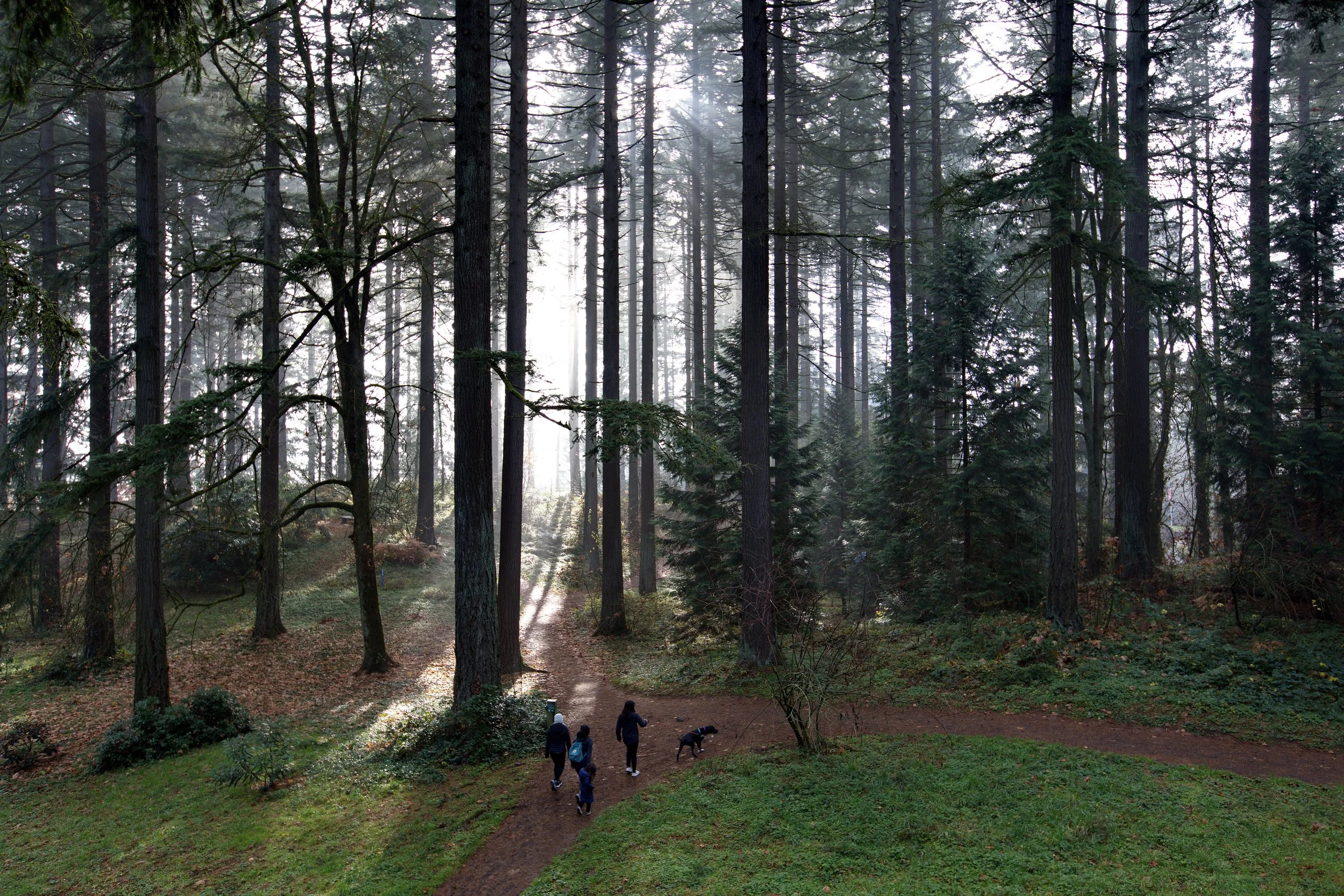
Hoyt Arboretum is Portland’s museum of living trees. Located on a ridgetop in Washington Park, the Arboretum hosts over 2,300 tree species and cultivars from around the world. Free and open to the public every day, its 12 miles of hiking trails showcase notable collections including stately redwoods, blooming magnolias, maples with stunning fall color, and many rare and endangered species. Download a trail map before you arrive or pick one up at the Visitor Center.
Hoyt Arboretum thrives thanks to a partnership between Portland Parks & Recreation and the membership-based nonprofit Hoyt Arboretum Friends.

Plan Your Visit
Start your trip at the Hoyt Arboretum Visitor Center on SW Fairview Blvd for maps, activities for all ages, and recommendations from staff and volunteers. There are two accessible bathrooms and water fountains in the courtyard, and an assortment of snacks, cold drinks, and gifts available for purchase inside.
Hoyt Arboretum Friends provides free maps and activities in English and Spanish. Free public tours and hikes are offered seasonally. There are also a variety of education programs for youth & family and adults throughout the year; many are free and some are fee-based.
Support the Arboretum and education programs like these by becoming a Hoyt Arboretum Friends member with an annual donation of $35 or more.
Weekday mornings and evenings are the quietest times to visit, while weekends and sunny afternoons tend to be busier.
Wear comfortable walking shoes and dress for changing weather. The Arboretum is often cooler than downtown Portland.
Fun Fact
Did you know there are redwoods in Portland? Hoyt Arboretum is home to all three species of redwoods, including a dawn redwood that became the first tree in North America to produce cones in nearly 6 million years! You can experience the Arboretum's majestic coast redwoods and giant sequoias from the popular Redwood Deck.
Getting Here
Skip the parking stress and take transit. Parking fills fast on busy days and during events, and payment is required at all lots. The Washington Park Free Shuttle Loop stops at all major attractions throughout the Park, making it easy to get around without a car.
-
Take the Red Line or Blue Line to Washington Park Station. Take the elevator to the station plaza on the street level. From here, board the Washington Park Free Shuttle and ride 2 stops to the Hoyt Arboretum stop. The shuttle stops directly in front of the Visitor Center on SW Fairview Blvd.
-
Take TriMet Bus 63 from downtown to the SW Rose Garden Way & Sherwood stop near the International Rose Test Garden and Portland Japanese Garden. From here, board the Washington Park Free Shuttle and ride 4 stops to the Hoyt Arboretum stop.
-
Take Trimet Bus 20 to the W Burnside & NW 24th Pl stop. From here, use the Stearns Canyon Trail to enter the Park. This paved, car-free trail gradually climbs approximately 0.3 miles through a shady canyon towards the Oregon Holocaust Memorial where you can board the Washington Park Free Shuttle and ride 6 stops to the Hoyt Arboretum stop.
-
Take TriMet Bus 15 to the W Burnside & NW 23rd stop. From here, cross Burnside and walk approximately 0.2 miles, where you can use the Stearns Canyon Trail to enter the Park. This paved, car-free trail gradually climbs approximately 0.3 miles through a shady canyon toward the Oregon Holocaust Memorial, where you can board the Washington Park Free Shuttle and ride 5 stops to the Hoyt Arboretum stop.
-
The Hoyt Arboretum Visitor Center is accessible via many different Park trails, including the Washington Park Loop Hike and paved Overlook Trail.
Learn more about getting here on foot, see a digital map of the park, or visit hoytarboretum.org for a downloadable trail map.
-
Bikes are welcome on Washington Park roads but are not permitted on Arboretum trails. The Hoyt Arboretum Visitor Center is located off of SW Fairview Blvd, a road with narrow shoulders and a few blind curves, suitable for experienced riders.
To access the Visitor Center from downtown or Goose Hollow: Pedal up SW Park Pl into the Park's internal road network. From here, ride 1.8 miles via SW Marconi Ave and SW Fairview Blvd.
From Northwest Portland: Enter at W Burnside & NW 24th Pl and follow the car-free Stearns Canyon Trail uphill to the main Park roads. Once inside, take either SW Fairview Blvd or SW Kingston Dr all the way to the Visitor Center.
From Sylvan-Highlands: Enter on SW Fairview Blvd. Ride on SW Fairview Blvd for about 1 mile until you reach the Visitor Center.
Bike racks are available near the Visitor Center entrance.
Learn more about getting here by bike or see a digital map of the park.
-
Paid parking is available at the Visitor Center lot (Zone 410) and near the Vietnam Veterans Memorial (Zone 404). Note your license plate when paying, and lock your car before exploring. A designated rideshare zone is located across from the Visitor Center in the small pay-to-park lot on SW Fairview Blvd.
Transit Tip
Some of Hoyt Arboretum’s most popular trails are just a short walk from the TriMet MAX station, making it one of the few major urban trail systems in the country you can reach directly by light rail.

Getting Around
The Washington Park Free Shuttle connects every major attraction on a continuous loop. Hop on and off as many times as you like, no parking or navigation required. Pair your visit to Hoyt Arboretum with another nearby attraction for a car-free day in the Park.
Hoyt Arboretum Shuttle Stop
[[next-arrival:hoyt]]


Accessibility
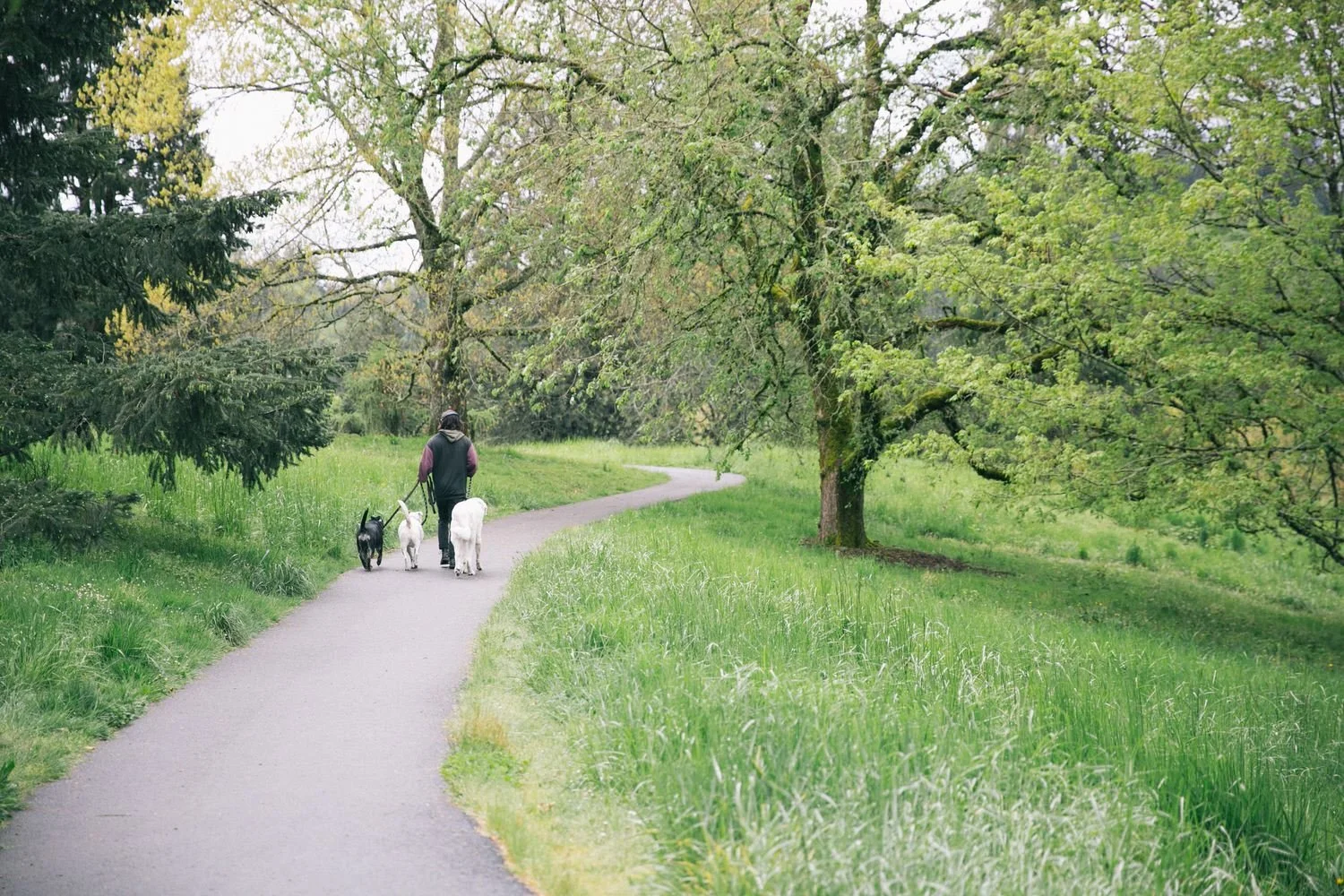
There are 12 miles of trails at Hoyt Arboretum with a combination of surface types and some areas with stairs and steep grades. There are three fully paved, mobility device-friendly trails including Overlook Trail, the Visitor Center Loop, and Bristlecone Pine Trail.
Overlook Trail and the Visitor Center Loop can be accessed from the Visitor Center and the Washington Park Free Shuttle stop for visitors arriving via transit. Accessible parking spaces are available in the lots adjacent to the Visitor Center, and restrooms meet accessibility guidelines.
Hoyt Arboretum Friends provides free maps and activities in English and Spanish and offers free specialty tours like Trees For All that stay on paved accessible trails, tours in Spanish, and tours with American Sign Language interpreters.
Trip Tips
Hoyt Arboretum History
Long before Hoyt Arboretum was established, this land was cared for by the Atfalati band of the Kalapuya people, whose stewardship shaped these forests for generations. In the late 1800s, the land became part of Multnomah County's Hillside “Poor Farm” before being set aside as a public park.
Established in 1928, Hoyt Arboretum was created as a living museum of trees where visitors, students, and scientists could experience and study tree diversity from around the world. Today, the 189-acre arboretum is home to more than 6,000 trees representing over 2,300 species and cultivars from six continents, playing an important role in conserving rare and threatened trees and climate research. Ranked among the world's top 50 arboreta by ArbNet, Hoyt Arboretum is home to three nationally-accredited living collections: Magnolia, Maple, and Conifer. Its 12 miles of trails invite visitors to discover one of the world's most diverse collections of temperate trees while connecting with nature in the heart of Portland.