International Rose Test Garden
Know Before You Go
- 400 SW Kingston Ave, Portland, Oregon 97221
- Hours: Open [[park_hours]]
Closed from 5am to 10am every other Wednesday May through August. - Cost: Garden is always free. Paid guided tours available.
- portland.gov/parks/washington-park-international-rose-test-garden
- waparkrosefriends.org
Visit the Construction & Closures Page for updates or closures related to events or maintenance.
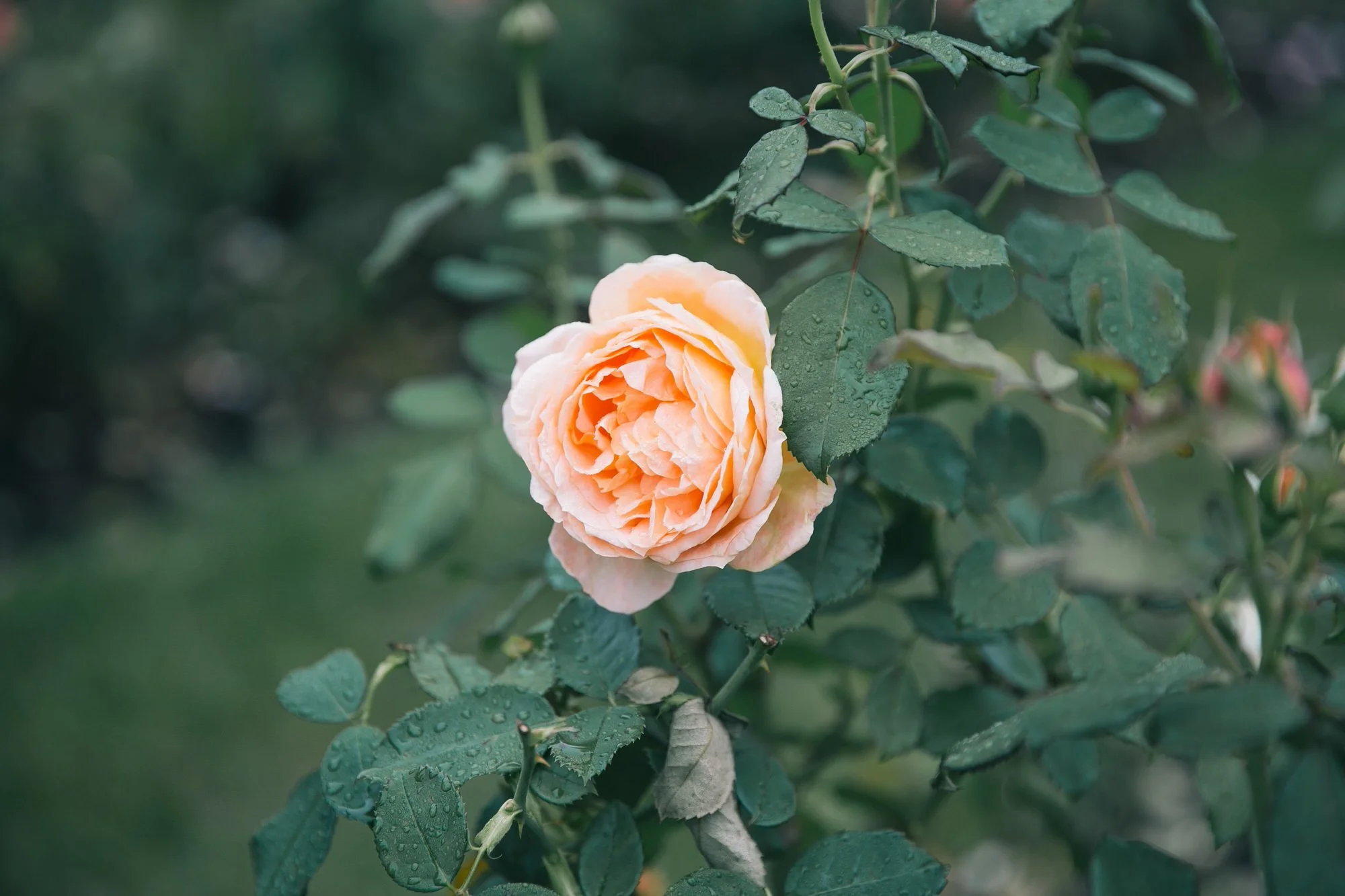
The International Rose Test Garden is one of Washington Park’s most iconic landscapes, home to more than 10,000 roses representing hundreds of varieties from around the world. Established in 1917, it remains the oldest continuously operating rose test garden in the United States. Today, it’s both a working garden and a place to slow down, offering seasonal color, sweeping city views, and quiet paths layered into the Park’s hillside.

Plan Your Visit
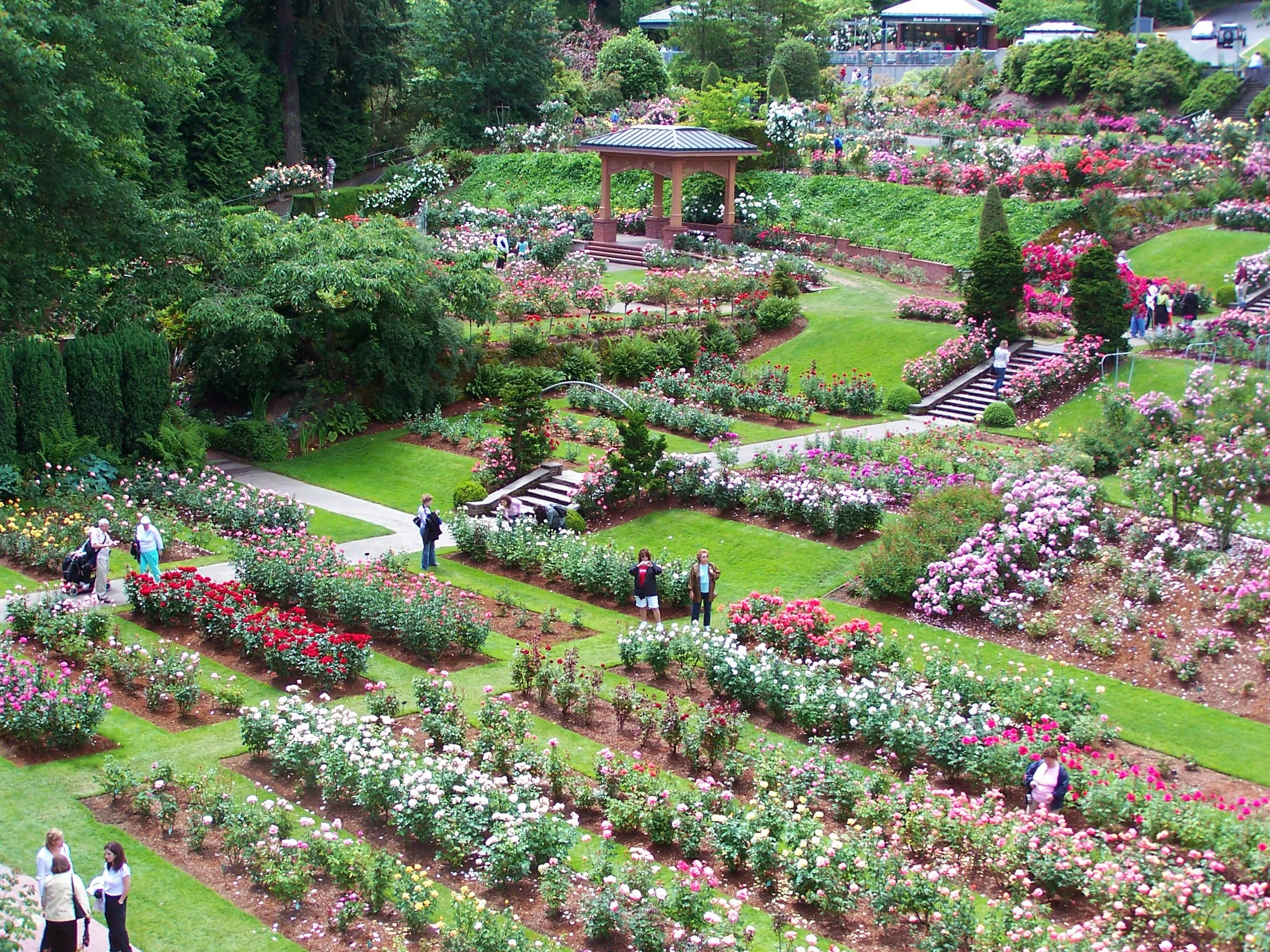
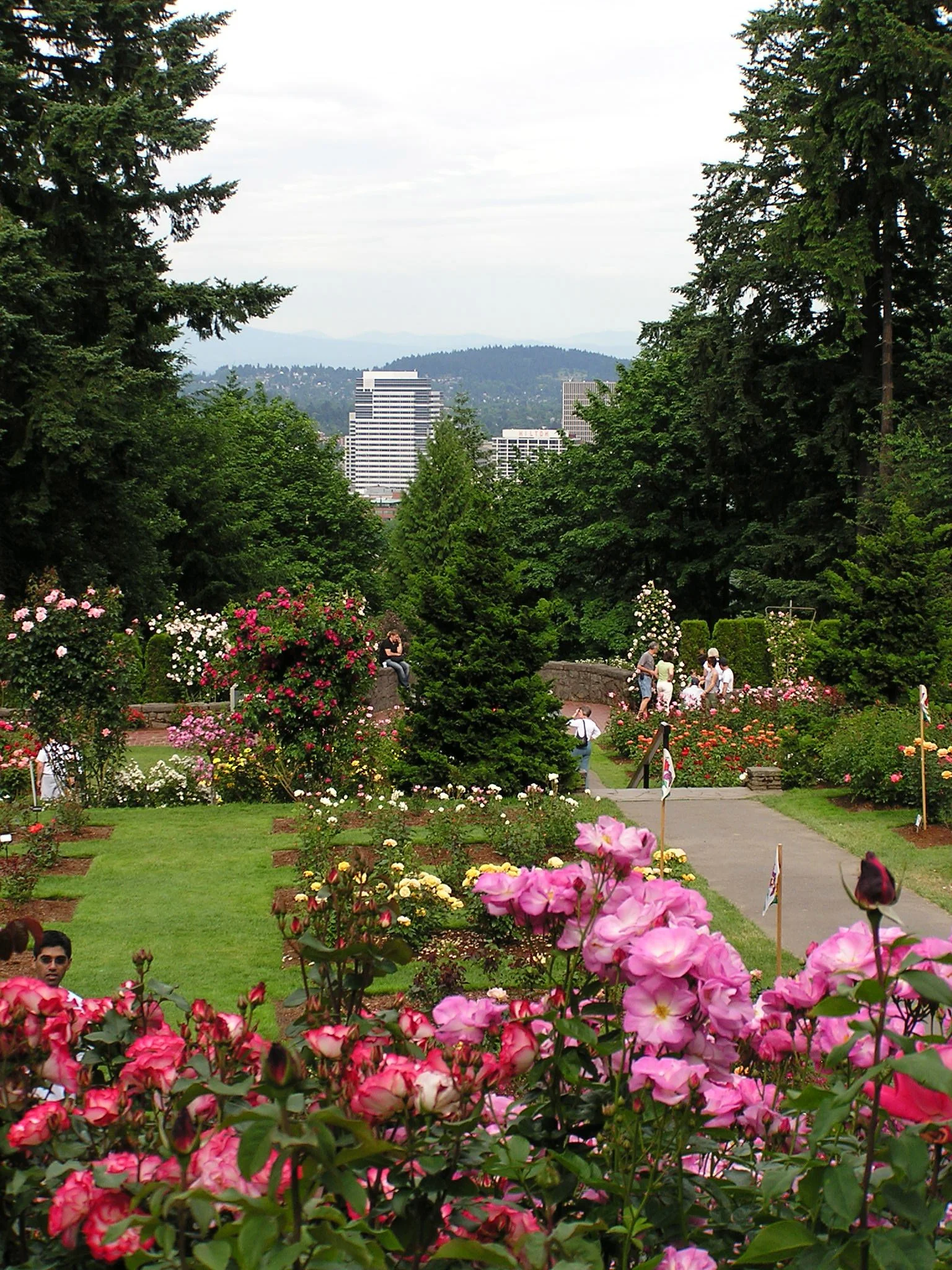
Roses bloom from late May through October, filling terraced beds that overlook the city and the Cascade Mountains. The garden is free to visit and open daily. While it’s especially popular in summer, there’s something to notice here year-round, from structure and fragrance to sweeping city views against the backdrop of Mount Hood.
The Rose Garden is made up of several distinct sections, including formal beds, specialty collections, and winding paths that connect to nearby trails, memorials, and picnic areas. You can wander for 15 minutes or linger for hours—it’s a flexible stop that works well as part of a larger Washington Park visit.
Restrooms are available nearby at the Rose Garden Plaza. Benches are spread throughout the garden, and most paths are paved, though grades vary.
The grounds feature several themed areas:
Royal Rosarian Garden: Honors Portland’s civic ambassadors, the Royal Rosarians, with namesake roses for past prime ministers.
Shakespeare Garden: Dedicated in 1945, it showcases roses named for his characters and includes a brick memorial.
Gold Medal Garden: Displays winners of Portland’s annual Gold Award, first issued in 1919.
Miniature Rose Garden: One of six U.S. test sites for the American Rose Society miniature rose program.
Fun Fact
The garden is a centerpiece of the annual Portland Rose Festival, blending horticultural research with civic pride and serving as a living emblem of Portland’s century-long romance with the rose.
Getting Here
Skip the parking stress and take transit. Parking fills fast on busy days and during events, and payment is required at all lots. The Washington Park Free Shuttle Loop stops at all major attractions throughout the Park, making it easy to get around without a car.
-
Take the Red Line or Blue Line to Washington Park Station. Take the elevator to the station plaza on the street level. From here, board the Washington Park Free Shuttle and ride 6 stops to the Int’l Rose Test Garden/Portland Japanese Garden stop.
-
Take TriMet Bus 63 from downtown to the SW Rose Garden Way & Sherwood stop, where you’ll be steps away from the Rose Garden entrance.
-
Take Trimet Bus 15 to the W Burnside & NW 23rd stop. From here, cross Burnside and walk approximately 0.2 miles, where you can use the Stearns Canyon Trail to enter the Park. This paved, car-free trail gradually climbs approximately 0.3 miles through a shady canyon toward the Oregon Holocaust Memorial, where you can board the Washington Park Free Shuttle and ride 1 stop to the Int’l Rose Test Garden/Portland Japanese Garden stop. You can also continue on foot approximately 0.3 miles via the MAC Trail, SW Rose Garden Way or other nearby paved paths.
-
Take Trimet Bus 20 to the W Burnside & NW 24th Pl stop. From here, use the Stearns Canyon Trail to enter the Park. This paved, car-free trail gradually climbs approximately 0.3 miles through a shady canyon toward the Oregon Holocaust Memorial, where you can board the Washington Park Free Shuttle and ride 1 stop to the Int’l Rose Test Garden/Portland Japanese Garden stop. You can also continue on foot approximately 0.3 miles via the MAC Trail, SW Rose Garden Way or other nearby paved paths.
-
If you’re already in Washington Park, there are several well-marked walking routes that lead directly to the International Rose Test Garden. From Burnside, the Stearns Canyon Trail offers a shaded, forested approach that climbs gradually toward the Rose Garden. Paved garden paths and portions of the MAC Trail connect the Rose Garden to nearby attractions like the Oregon Holocaust Memorial and Rose Garden Children’s Park.
Wayfinding signage throughout the Park helps guide you to the Garden, but expect some hills and stairs as you approach. Allow extra time if you’re walking with strollers or mobility devices.
Learn more about getting here on foot or see a digital map of the park.
-
From downtown or Goose Hollow: Pedal up SW Park Pl into the Park’s internal road network. From here, ride approximately 0.6 miles along SW Sacajawea Blvd and SW Rose Garden Way until you reach the Garden.
From Northwest Portland: Enter at W Burnside & NW 24th Pl and follow the car-free Stearns Canyon Trail uphill until it meets the main Park roads. Once inside the Park, access the Rose Garden via SW Sherwood Blvd or SW Kingston Ave.
From Arlington Heights: Enter the Park on SW Kingston Avenue. Here, you’ll find bike racks and the Rose Garden entrance.
From Sylvan-Highlands: Enter on SW Fairview Blvd. Ride approximately 1.6 miles on SW Fairview Blvd and SW Kingston Ave until you reach the Garden.
Bike racks are available near the Rose Garden Plaza and picnic tables. Some paths within the garden are pedestrian-only, and grades can be steep in places. Be prepared to walk your bike near busy garden areas. BIKETOWN bikeshare stations are located near the Holocaust Memorial and on SW Rose Garden Way.
Learn more about getting here by bike or see a digital map of the park.
-
Paid street parking is available along SW Rose Garden Way. Note your license plate when paying, and lock your car before exploring. A designated rideshare zone is located nearby at the same location as the Washington Park Free Shuttle stop and TriMet Bus 63 stop.
Transit Tip
The Goose Hollow MAX station is one stop east of the Park, just a 1-mile walk to the Rose Garden. If you plan to pair your transit ride with a walk and prefer a shorter trip, stop here. The walk from Washington Park station is 1.7 miles.

Getting Around
The Washington Park Free Shuttle connects every major attraction on a continuous loop. Hop on and off as many times as you like, no parking or navigation required. Pair your visit to the International Rose Test Garden with another nearby attraction for a car-free day in the Park.
Int’l Rose Test Garden/Portland Japanese Garden Shuttle Stop
[[next-arrival:rose]]


Accessibility
Many of the Rose Garden’s primary paths are paved and wide, offering relatively smooth access through the main terraces. There is wheelchair-accessible parking, ramps into the garden, and an accessible main plaza, plus an accessible Free Shuttle. However, the garden is built into a hillside, and some routes include sustained slopes or steps.
Wheelchair-accessible restrooms are available on the plaza, and benches throughout the garden offer frequent places to rest.
Trip Tips
International Rose Test Garden History
Established in 1917, the International Rose Test Garden was created during World War I, when rose growers in Europe sent their prized hybrid roses to Portland for safekeeping. The city’s mild climate proved ideal for testing and preserving these varieties, and what began as a practical effort to protect roses soon became a living symbol of international cooperation.
Over time, the garden evolved into a formal testing ground where new rose varieties are evaluated for fragrance, color, disease resistance, and performance. Roses are sent from breeders around the world, reinforcing Portland’s long-standing nickname, “the City of Roses.” Landscape planning for the garden was influenced by the broader vision for Washington Park, including principles associated with the Olmsted Brothers, emphasizing views, terraces, and a balance between formal design and the natural hillside setting.
Today, the Rose Garden remains both a working test garden and a beloved public space, honoring its century-old role in horticulture while welcoming millions of visitors each year to experience its history, beauty, and global connections firsthand.
Community & Management
Managed by Portland Parks & Recreation in partnership with the non-profit Friends of the International Rose Test Garden, the site relies on volunteers for maintenance, tours, and education. It received the Garden of Excellence Award from the World Federation of Rose Societies in 2006 and celebrated its centennial in 2017 with accessibility renovations.