Oregon Zoo
Know Before You Go
- 4001 SW Canyon Road, Portland, OR 97221
- Hours vary by season.
Current hours: [[zoo_hours_pattern]]
[[zoo_hours_alert]] [[zoo_hours_upcoming]]
Plan ahead by purchasing timed-entry tickets in advance online. - Cost: [[zoo_cost]]. Discounts available.
- oregonzoo.org
- 503-226-1561
Membership: 503-505-5493
Visit the Construction & Closures Page for updates or closures related to events or maintenance.
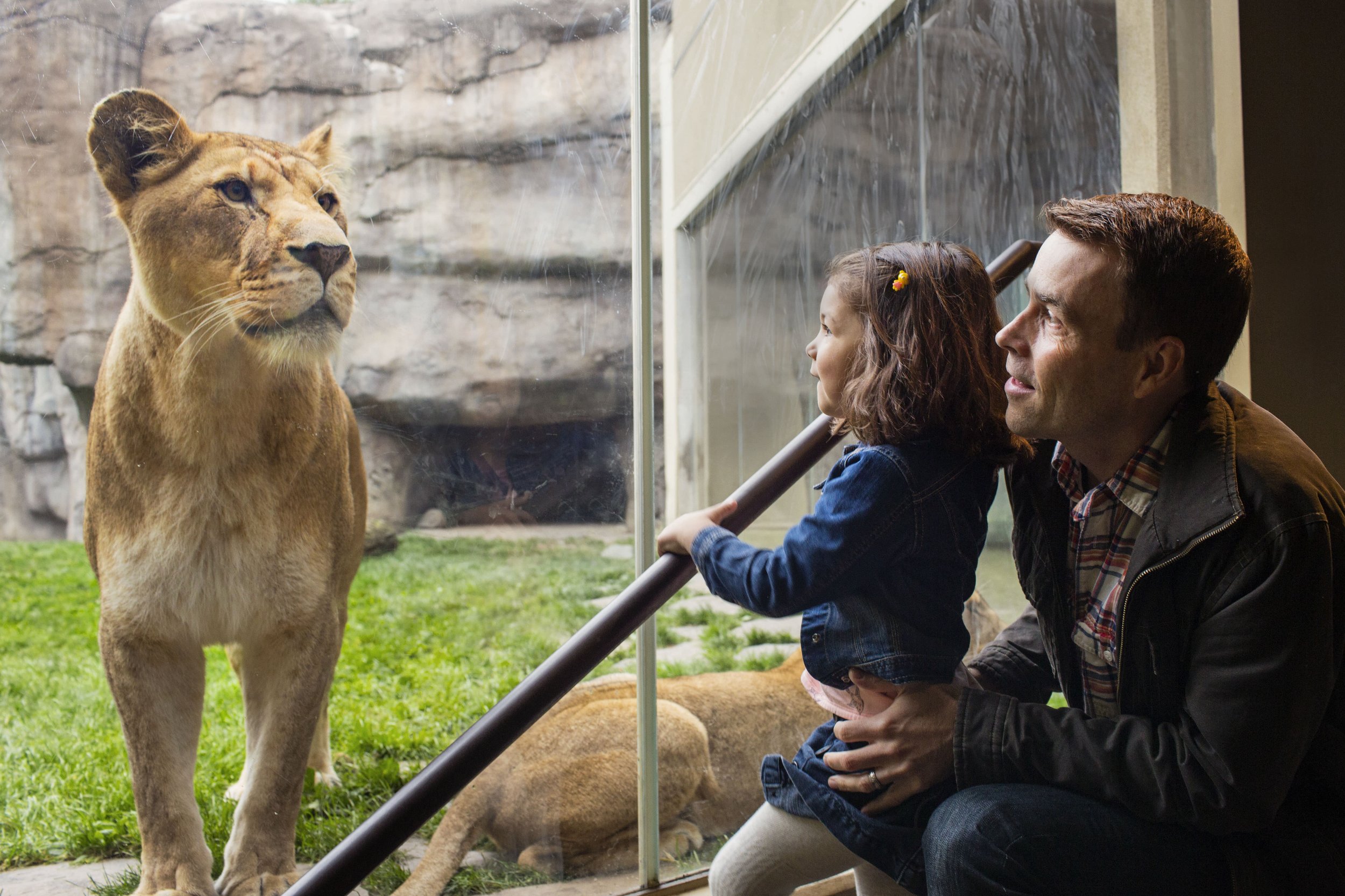
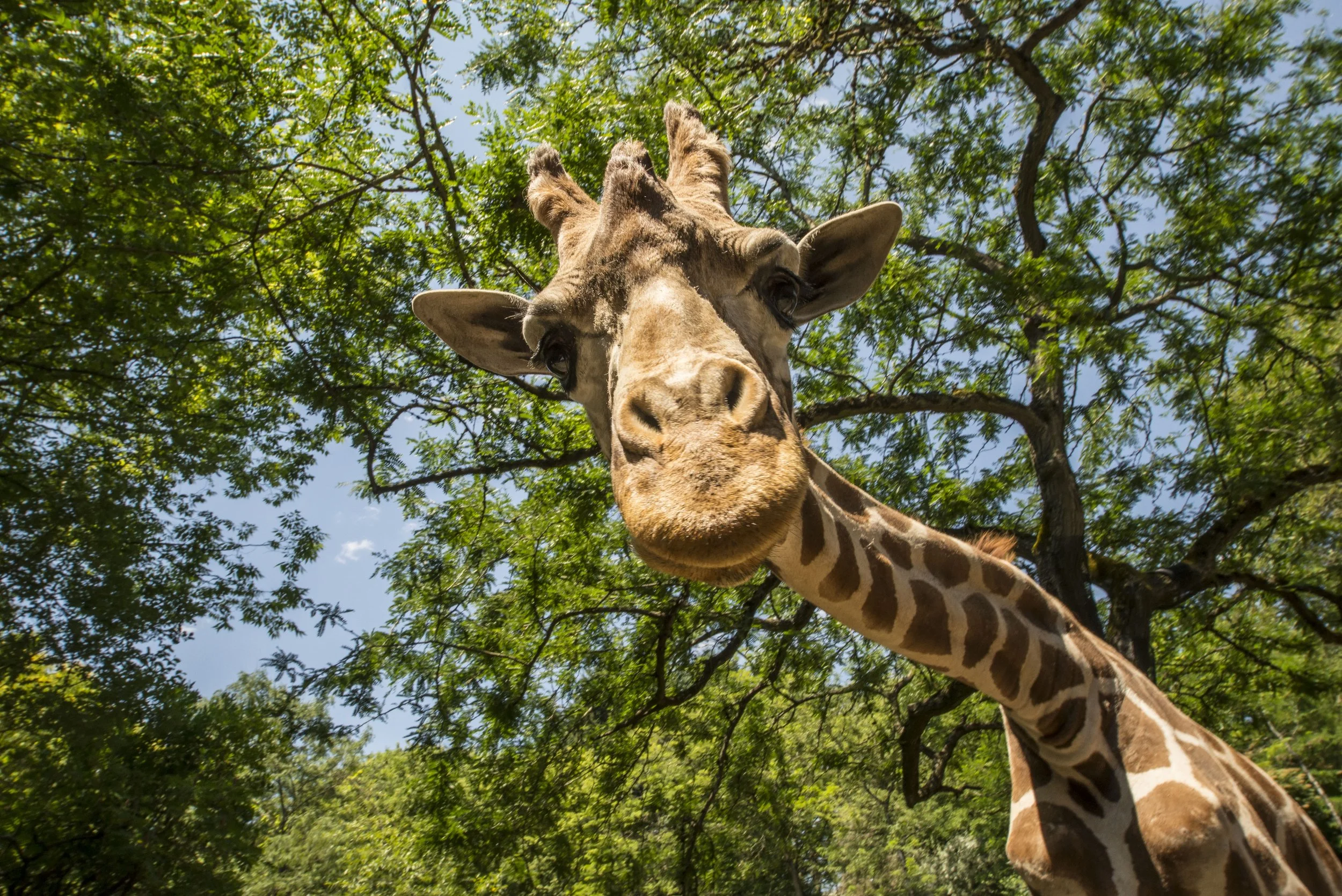
Perched on a hill of 64 forested acres, the Oregon Zoo is one of the most visited cultural landmarks in the Pacific Northwest, with around 1.5 million visitors each year. More than a thousand animals call this place home, from Asian elephants, giraffes and orangutans to insects and birds.
Oregon Zoo is a hub for science, conservation, education and animal well-being, delivering the highest quality of care. With each visit, you help protect endangered species at home and around the world.

Plan Your Visit
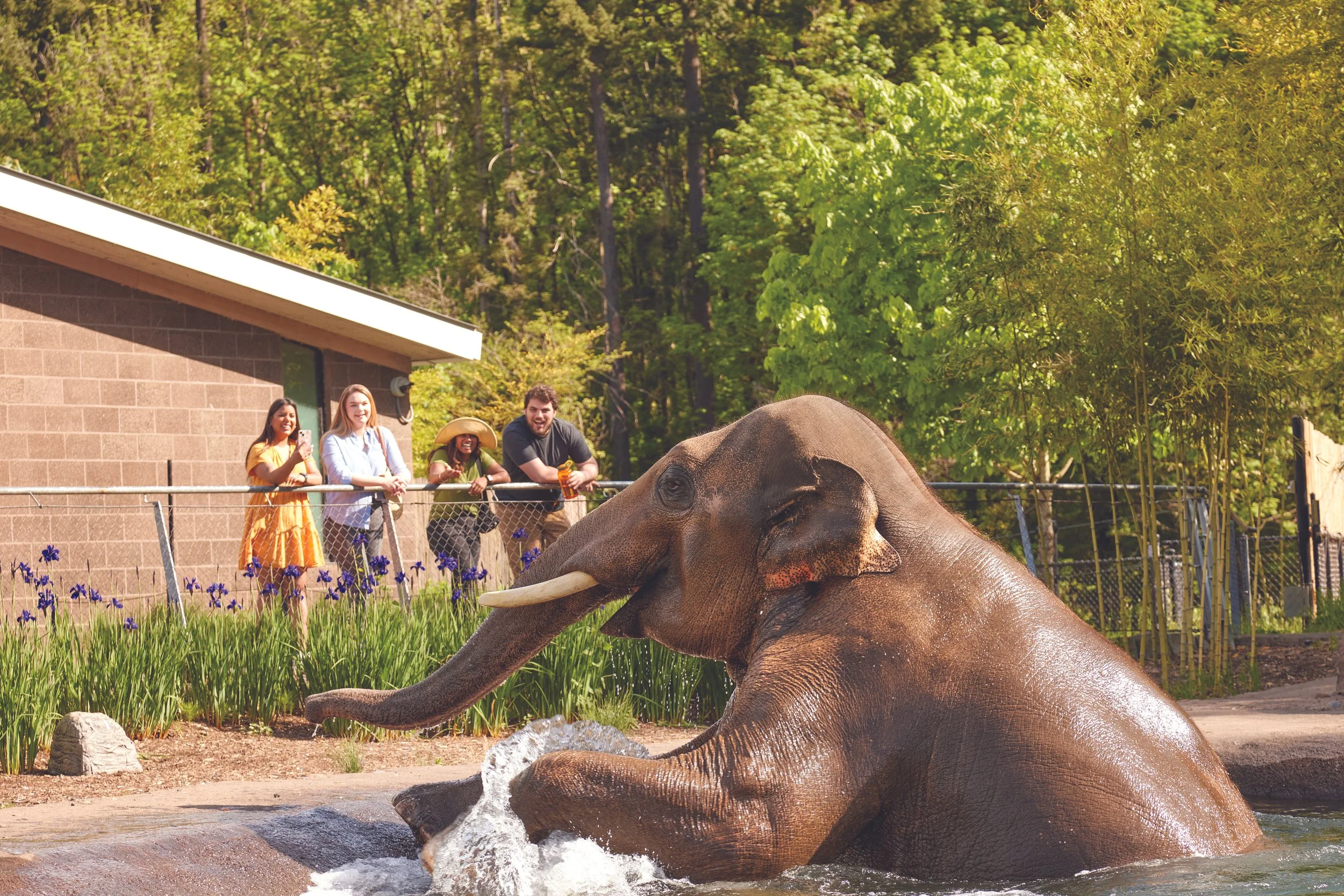
The Oregon Zoo recommends purchasing tickets online in advance. Get tickets at oregonzoo.org →
Discounted admission: Available for Oregon and Washington residents who qualify for certain income assistance programs. Learn about discounted admission →
Busy times: Tickets often sell out on sunny weekends, school holidays, and during special events like ZooLights and ZooNights. Buy tickets in advance.
Daily keeper talks: Check the zoo’s daily schedule for keeper talks, animal encounters, and feeding times.
Rides: The zoo’s train and carousel typically operate during regular hours but may close seasonally. Call ahead to confirm.
Fun Fact
Founded from a small menagerie in 1888, the Oregon Zoo has grown into a leader in conservation and education.
Getting Here
Skip the parking stress and take transit. Parking fills fast on busy days and during events, and payment is required at all lots. The Washington Park Free Shuttle Loop stops at all major attractions throughout the Park, making it easy to get around without a car.
-
Take the Red Line or Blue Line to Washington Park Station. Take the elevator to the station plaza on the street level, which is located directly in front of the Oregon Zoo entrance.
-
Take TriMet Bus 63 from downtown to the SW Rose Garden Way & Sherwood stop near the International Rose Test Garden and Portland Japanese Garden. From here, board the Washington Park Free Shuttle and ride 2 stops to the Oregon Zoo/World Forestry Center stop.
-
Take TriMet Bus 20 to the W Burnside & NW 24th Pl stop. From here, use the Stearns Canyon Trail to enter the Park. This paved, car-free trail gradually climbs approximately 0.3 miles through a shady canyon toward the Oregon Holocaust Memorial, where you can board the Washington Park Free Shuttle and ride 3 stops to the Oregon Zoo stop.
-
Take TriMet Bus 15 to the W Burnside & NW 23rd stop. From here, cross Burnside and walk approximately 0.2 miles, where you can use the Stearns Canyon Trail to enter the Park. This paved, car-free trail gradually climbs approximately 0.3 miles through a shady canyon towards the Oregon Holocaust Memorial, where you can board the Washington Park Free Shuttle and ride 3 stops to the Oregon Zoo stop.
-
From Washington Park Station: The Zoo entrance is at street level via the station elevator. You can also walk between the Oregon Zoo, World Forestry Center, and nearby Washington Park Free Shuttle stop using paved Park paths and sidewalks.
From Hoyt Arboretum: The Zoo is approximately 0.5 miles from the Arboretum’s Visitor Center via the Wilwood Trail, Marquam Trail, and Knights Blvd. Follow trail signs to the Oregon Zoo.
From the Gardens: You can reach the Zoo by hiking approximately 1.8 miles downhill from the Int’l Rose Test Garden/Portland Japanese Garden via the MAC Trail and Wilwood Trail. Follow trail signs to the Oregon Zoo.
Learn more about getting here on foot or see a digital map of the park.
-
From downtown or Goose Hollow: Pedal up SW Park Pl into the Park’s internal road network. From here, ride approximately 2 miles steadily uphill via SW Sherwood Blvd and SW Kingston Dr.
From Northwest Portland: Enter at W Burnside & NW 24th Pl and follow the car-free Stearns Canyon Trail uphill until it meets the main Park roads. Once inside the Park, follow SW Rose Garden Way to SW Kingston Dr until you reach the Oregon Zoo, located off SW Zoo Rd.
From Sylvan-Highlands: Enter the Park on SW Fairview Blvd. Ride downhill on SW Fairview Blvd and SW Knights Blvd for 0.5 miles until you reach the Oregon Zoo.
Bike racks are available near the zoo entrance.
Learn more about getting here by bike or see a digital map of the park.
-
Paid parking is available in Washington Park Lots A, B, and C near the Oregon Zoo. Note your license plate when paying, and lock your car before exploring. A designated rideshare zone is located at the Zoo Education Center entrance.
Transit Tip
If you’re coming with kids and want to drive most of the way, consider starting at the Sunset Transit Center Park & Ride, where 600+ free parking spaces are available. From there, hop on the MAX with other zoo-goers for a fun, five-minute journey through the Robertson Tunnel to the deepest transit station in North America—Washington Park Station, located 260 feet below ground. Kids love this! Some even consider it part of the zoo experience. Every train has space for strollers, and the station elevators make it easy to roll right off and into the zoo.
Getting Around
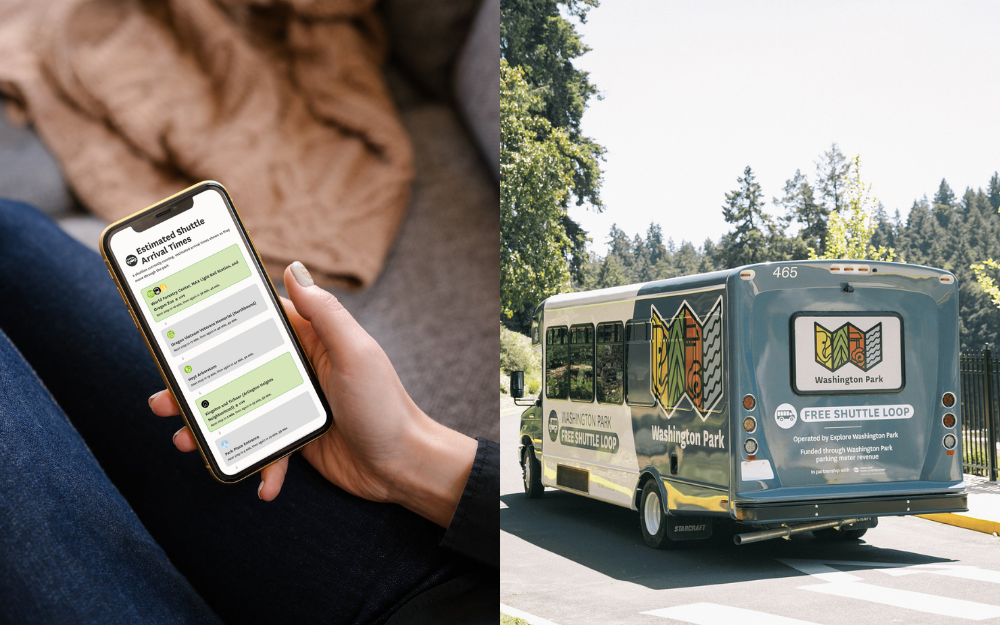
The Washington Park Free Shuttle connects every major attraction on a continuous loop. Hop on and off as many times as you like, no parking or navigation required. Pair your visit to the Oregon Zoo with another nearby attraction for a car-free day in the Park.
World Forestry Center, MAX Light Rail Station, and Oregon Zoo Shuttle Stop
[[next-arrival:zoo]]
Accessibility
The zoo’s terrain includes hills and varied surfaces. Check with zoo staff for accessible route recommendations. For full details and the most up-to-date information, review the Oregon Zoo’s accessibility page.
Wheelchair and electric scooter rentals available (first come, first served)
MAX light rail stops at Washington Park station next to the zoo; trains are wheelchair accessible
Accessible parking and designated loading/unloading zones near the entrance
Service animals welcome (check in at entrance)
Accessible train and carousel
Sensory supports available (free sensory kits; KultureCity Sensory Inclusive Venue)
Complimentary ticket available for one-to-one support person
Adult changing tables in select restrooms
First aid available on site
Trip Tips
Oregon Zoo History
The Oregon Zoo traces its roots to 1888, when a small collection of animals belonging to Richard Knight was donated to the City of Portland. In its early years, the zoo was located on the hillside that is now occupied by Portland Japanese Garden →
As the zoo expanded and animal care evolved, it soon outgrew its original location. In the 1950s, the zoo relocated to its current site just downhill, where larger habitats and modern facilities were built. The move cleared the way for the creation of Portland Japanese Garden, which opened in the 1960s and transformed the former zoo location into the serene cultural landscape visitors know today. Both institutions continue to shape Washington Park’s identity—one through conservation and wildlife care, the other through art, culture, and peaceful design.