Oregon Holocaust Memorial
Know Before You Go
- 95205 SW Washington Way, Portland, OR 97205
- Hours: Open [[park_hours]]
- Cost: Always free
- ojmche.org/oregon-holocaust-memorial
Visit the Construction & Closures Page for updates or closures related to events or maintenance.
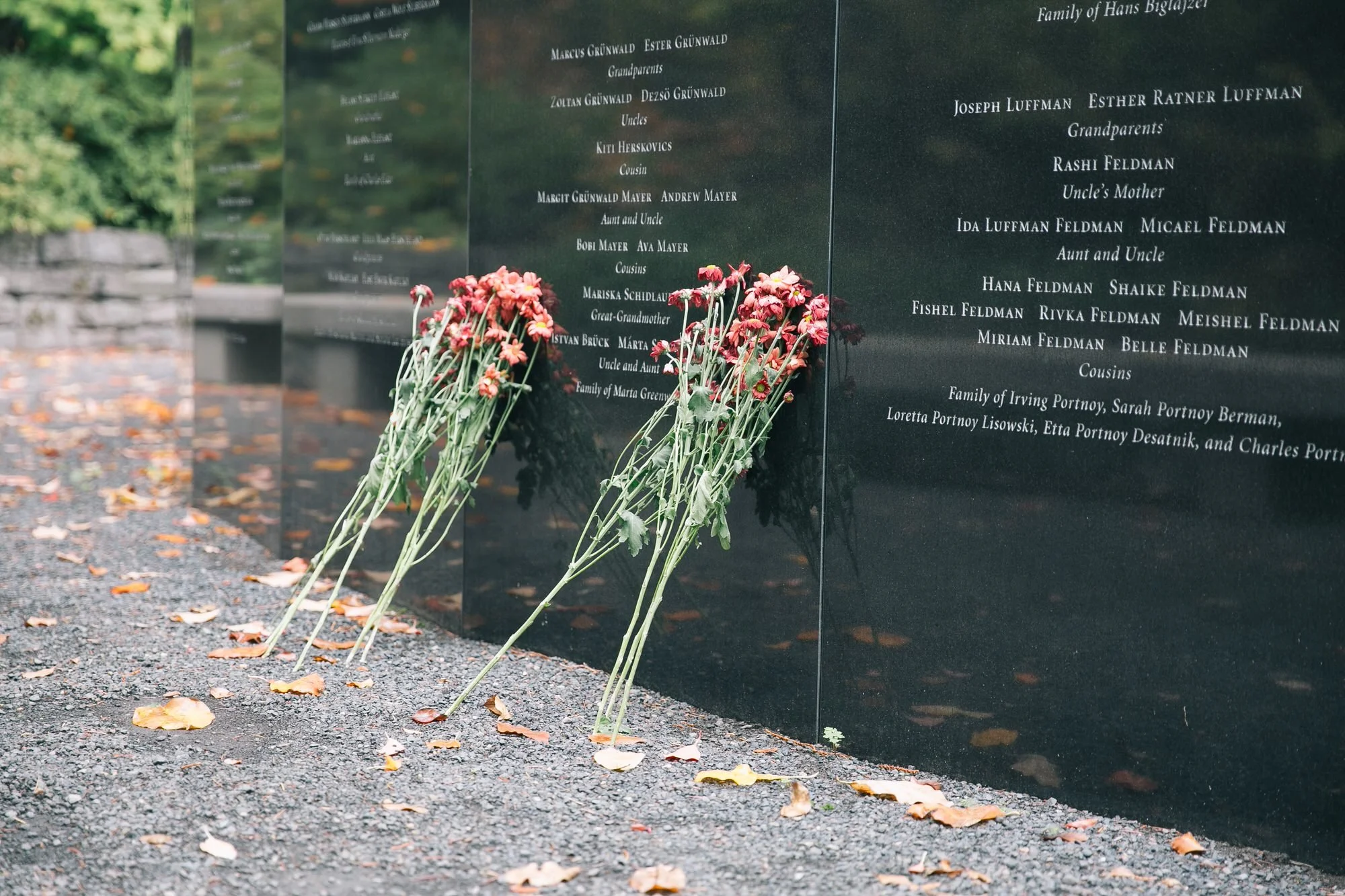
The Oregon Holocaust Memorial is a quiet, contemplative outdoor memorial in Washington Park honoring the six million Jewish victims of the Holocaust and all who suffered under Nazi persecution. Designed as a place for reflection and remembrance, the memorial features engraved stone panels, a railcar, and interpretive elements that invite visitors to pause and bear witness. It’s free to visit and can be paired with nearby gardens and other memorials for a full day of reflection in the Park.

Plan Your Visit
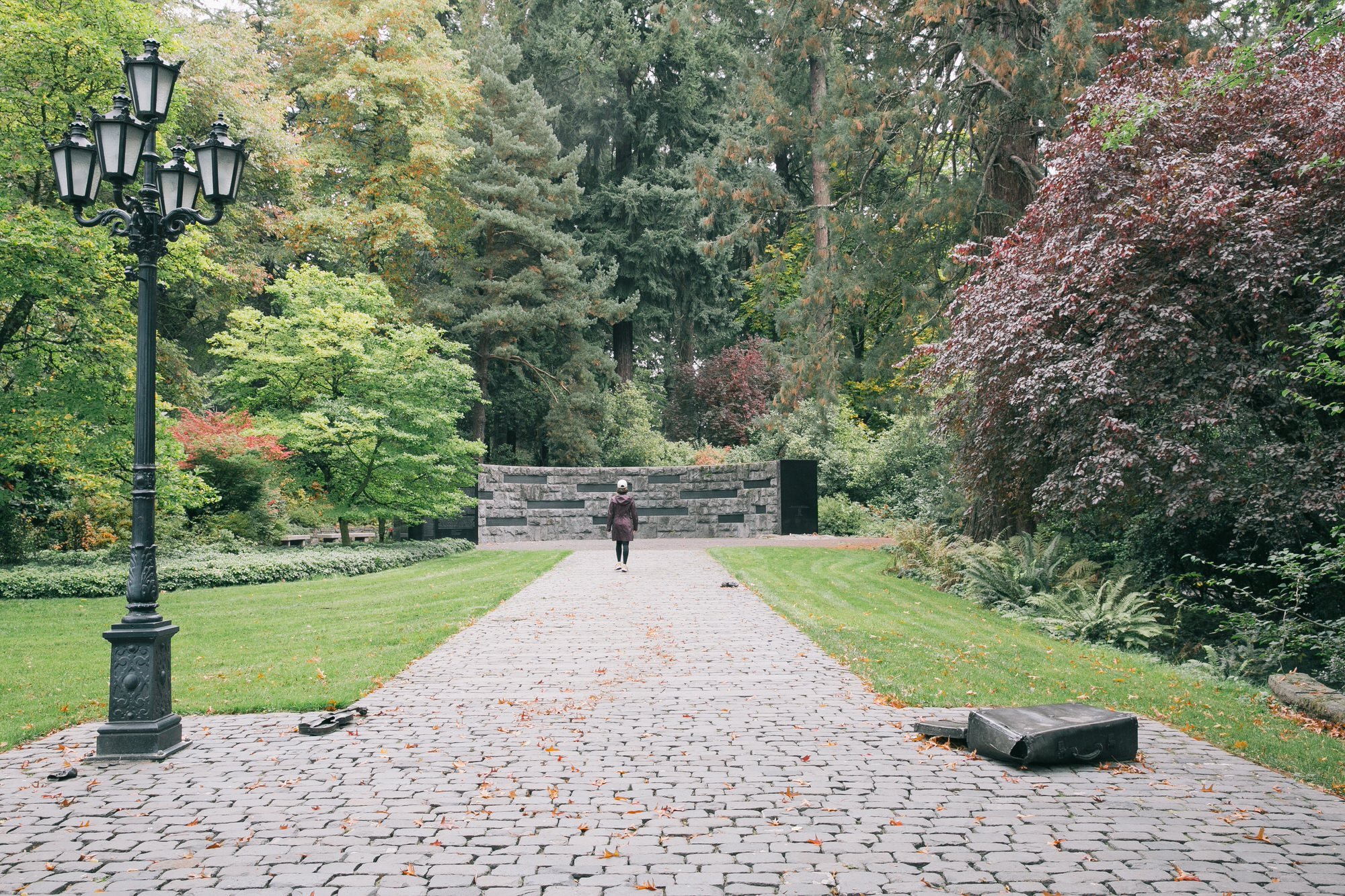
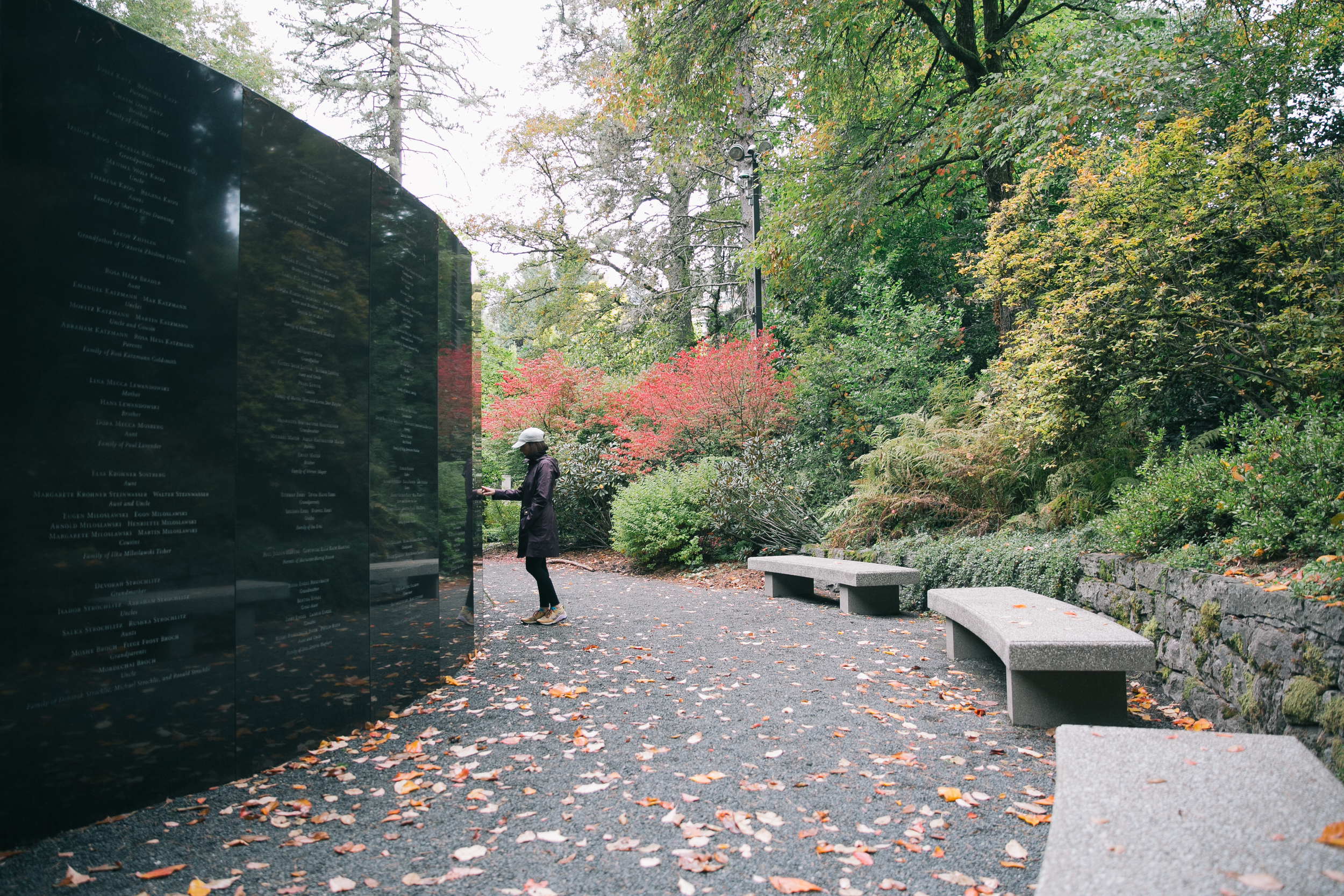
Benches and pathways invite visitors to move slowly and reflect. The setting is intentionally quiet and contemplative; visitors are encouraged to be respectful of the space and of others who may be there to remember loved ones. Benches and pathways invite visitors to move slowly and reflect.
The memorial is maintained in partnership with community organizations and is occasionally the site of commemorative events and educational gatherings.
How the Design Shapes the Experience
Notice the cobblestone walkway, benches, and lamp posts—these elements intentionally echo European town squares, the everyday public spaces where Jewish families were rounded up and deported. The familiar setting is meant to contrast with the violence that occurred there.
The narrow, enclosed pathways are designed to create a subtle feeling of confinement. As you move through the memorial, pay attention to how the space shifts emotionally as well as physically.
Many of the engraved texts are positioned to be read slowly, one at a time. Give yourself permission to pause between panels.
The railcar element is a direct reference to the trains used in deportations to concentration and extermination camps. Stand at a respectful distance and take in its scale.
Did You Know?
The memorial’s design incorporates text from survivors and witnesses, grounding the experience in personal stories as well as historical context. Beneath the memorial is a vault containing soil and ashes from six killing-center camps.
Getting Here
Skip the parking stress and take transit. Parking fills fast on busy days and during events, and payment is required at all lots. The Washington Park Free Shuttle Loop stops at all major attractions throughout the Park, making it easy to get around without a car.
-
Take the Red Line or Blue Line to Washington Park Station. Take the elevator to the station plaza on the street level. From here, board the Washington Park Free Shuttle and ride 5 stops to the Oregon Holocaust Memorial stop.
-
Take TriMet Bus 63 to the SW Rose Garden Way & Wright stop near the Park Place Entrance to the Park. From here, follow the path located just across SW Wright Ave 14-feet to the memorial.
-
Take TriMet Bus 20 to the W Burnside & NW 24th Pl stop. From here, use the Stearns Canyon Trail to enter the Park. This paved, car-free trail gradually climbs approximately 0.3 miles through a shady canyon toward the Oregon Holocaust Memorial.
-
Take TriMet Bus 15 to the W Burnside & NW 23rd stop. From here, cross Burnside and walk approximately 0.2 miles, where you can use the Stearns Canyon Trail to enter the Park. This paved, car-free trail gradually climbs approximately 0.3 miles through a shady canyon toward the Oregon Holocaust Memorial.
-
From W Burnside St, the Stearns Canyon Trail offers a shaded, forested approach that climbs gradually to the Holocaust Memorial area.
From within the Park, paved paths and the MAC Trail connect nearby attractions to the memorial. Follow Park wayfinding signs.
Learn more about getting here on foot or see a digital map of the park.
-
From downtown or Goose Hollow: Pedal up SW Park Pl into the Park’s internal road network. From here, ride approximately 0.3 miles until you reach the memorial.
From Northwest Portland: Enter at W Burnside & NW 24th Pl and follow the car-free Stearns Rd uphill for 0.5 miles until you reach the Oregon Holocaust Memorial.
Bike racks are available near the memorial entrance, and BIKETOWN bikeshare stations are located nearby on SW Rose Garden Way.
Learn more about getting here by bike or see a digital map of the park.
-
Paid parking is available in a small lot near the memorial off SW Washington Way. Note your license plate when paying, and lock your car before exploring. The closest designated rideshare zone is located approximately 0.4 miles away in the same location as the Int’l Rose Test Garden/Portland Japanese Garden Washington Park Free Shuttle stop and TriMet Bus 63 stop.
Transit Tip
The ride on the Free Shuttle Loop from the Washington Park MAX Station takes about 15 minutes. Enjoy the quiet journey through the trees as you approach this reflective space.

Getting Around
The Washington Park Free Shuttle connects every major attraction on a continuous loop. Hop on and off as many times as you like, no parking or navigation required. Pair your visit to the Oregon Holocaust Memorial with another nearby attraction for a car-free day in the Park.
Oregon Holocaust Memorial Shuttle Stop
[[next-arrival:holocaust]]


Accessibility
The memorial includes paved pathways suitable for most mobility devices, with seating available for rest and reflection. Part of the memorial is uneven cobblestone. The surrounding paths within Washington Park are a mix of paved and gently sloped routes. The Washington Park Free Shuttle is ADA-accessible and provides nearby access points for visitors arriving via transit.
Trip Tips
Oregon Holocaust Memorial History
The Oregon Holocaust Memorial was envisioned in 1994 by local survivors and their descendants, who formed a coalition to create a public space honoring victims and educating future generations. After nearly a decade of planning, fundraising, and community collaboration, the memorial was dedicated on August 29, 2004 in Washington Park.
The design team incorporated survivor input into every element, from cobblestoned pathways to engraved panels. Today, the memorial is stewarded by the Oregon Jewish Museum and Center for Holocaust Education and remains a place for reflection, learning, and remembrance.