World Forestry Center
Know Before You Go
- 4033 SW Canyon Rd, Portland, OR 97221
- Hours vary by season.
Current hours: [[wfc_open]] - Cost: [[wfc_cost]]. Discounts available.
- worldforestry.org
- 503-228-1367
Visit the Construction & Closures Page for updates or closures related to events or maintenance.
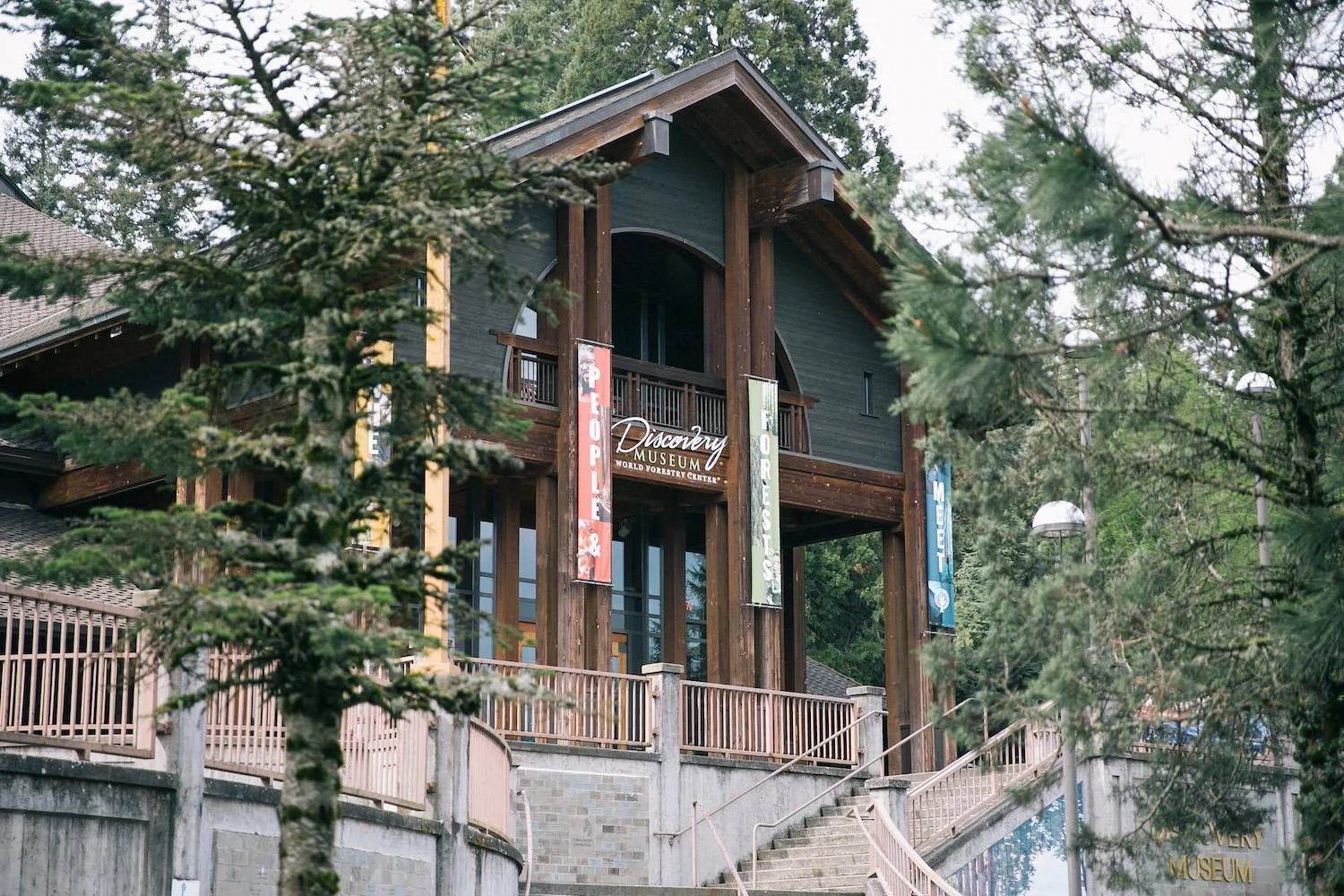
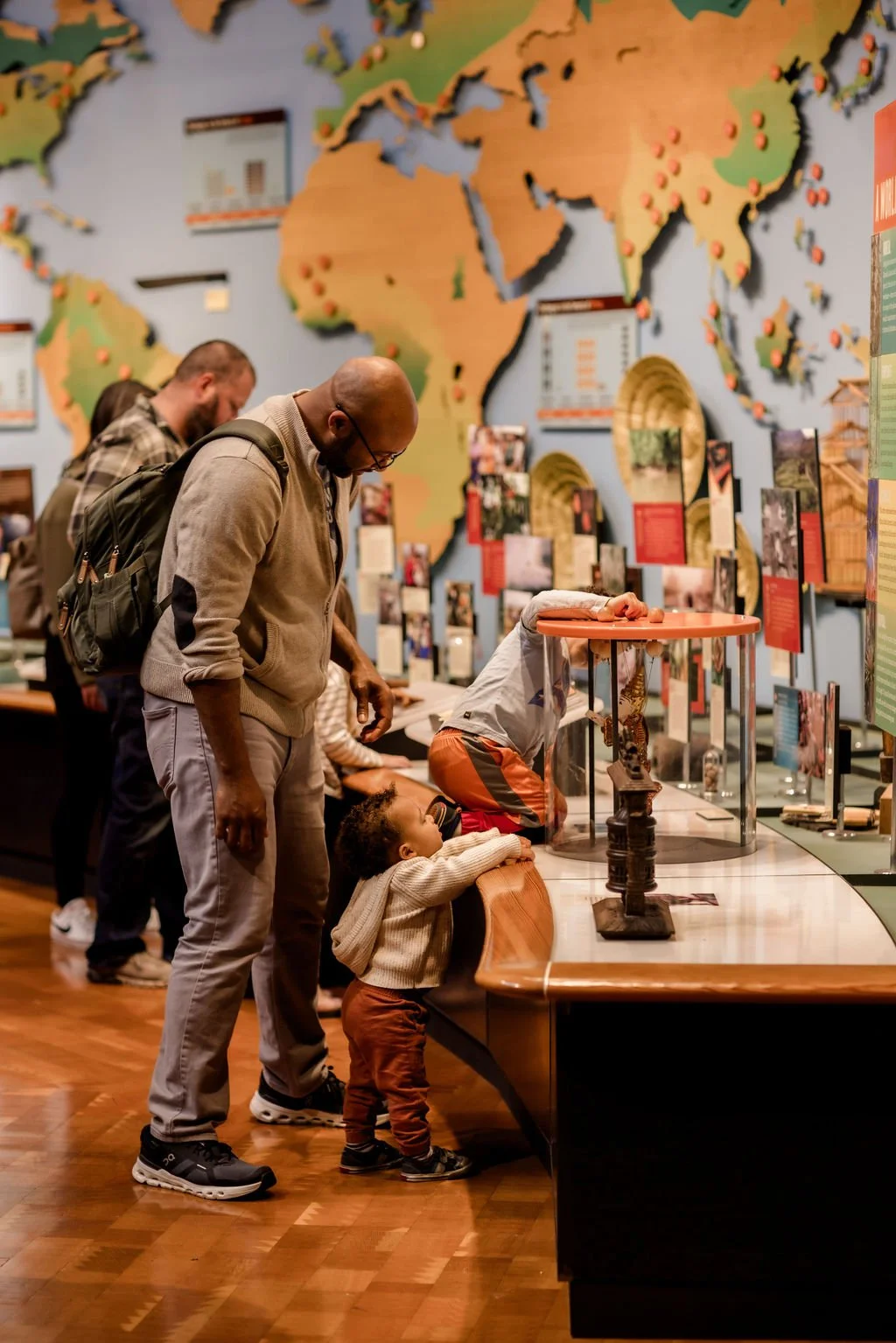
World Forestry Center’s Discovery Museum is an interactive museum exploring forests, sustainability, and the role wood plays in everyday life. Located within Washington Park, it’s an easy indoor stop to pair with nearby attractions like the Oregon Zoo or Hoyt Arboretum. Exhibits are designed for a wide range of ages, making this a good choice for families, school groups, and curious adults looking to learn more about forests in the Pacific Northwest and beyond.

Plan Your Visit
Stop by the main entrance for tickets, restrooms, and exhibit information. Most visitors spend 60–90 minutes exploring the museum, though families with younger kids may want to allow more time for hands-on exhibits. The Discovery Museum is a good year-round option, especially on rainy or cold days when some outdoor attractions may be less appealing.
The museum offers rotating art exhibits, special programs, an immersive theater experience, and occasional family events throughout the year. Visitors interested in deeper engagement can explore classes, lectures, and community events focused on forests, climate, and sustainability.
Start on the main exhibit floor to get oriented, then work your way up to upper-level, which features rotating art exhibits.
Don’t miss the new, immersive theater experience, combining evocative media, storytelling, and interactive spaces to explore one of the most urgent issues of our time: how forests, climate change, and catastrophic wildfire are deeply connected—and what choices we can make today to shape a better future.
This is a great stop for school-aged kids who enjoy hands-on learning and exploration.
Fun Fact
This museum is home to a giant cross-section of an old-growth Douglas fir where visitors can read hundreds of years of Pacific Northwest history through the tree’s growth rings—including years marked by droughts, fires, and major historical events.
Getting Here
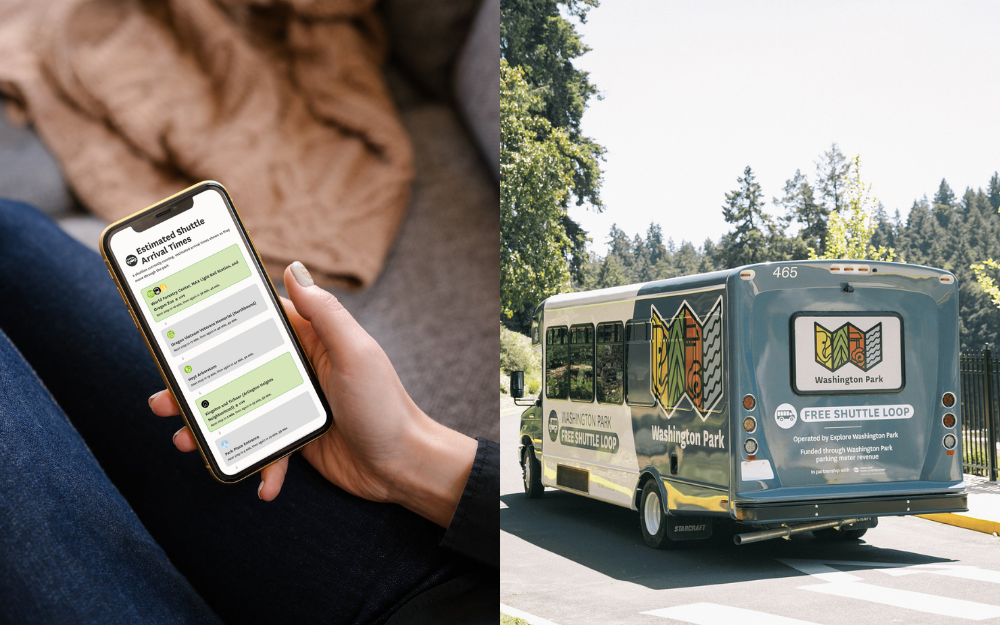
Skip the parking stress and take transit. Parking fills fast on busy days and during events, and payment is required at all lots. The Washington Park Free Shuttle Loop stops at all major attractions throughout the Park, making it easy to get around without a car.
-
Take the Red Line or Blue Line to Washington Park Station. Take the elevator to the station plaza on the street level, which is located directly in front of the World Forestry Center’s Discovery Museum entrance.
-
Take TriMet Bus 63 from downtown to the SW Rose Garden Way & Sherwood stop near the International Rose Test Garden and Portland Japanese Garden. From here, board the Washington Park Free Shuttle and ride 2 stops to the World Forestry Center stop.
-
Take TriMet Bus 20 to the W Burnside & NW 24th Pl stop. From here, use the Stearns Canyon Trail to enter the Park. This paved, car-free trail gradually climbs approximately 0.3 miles through a shady canyon towards the Oregon Holocaust Memorial, where you can board the Washington Park Free Shuttle and ride 3 stops to the World Forestry Center stop.
-
Take TriMet Bus 15 to the W Burnside & NW 23rd stop. From here, cross Burnside and walk approximately 0.2 miles, where you can use the Stearns Canyon Trail to enter the Park. This paved, car-free trail gradually climbs approximately 0.3 miles through a shady canyon towards the Oregon Holocaust Memorial, where you can board the Washington Park Free Shuttle and ride 3 stops to the World Forestry Center stop.
-
From Washington Park Station: The World Forestry Center’s Discovery Museum entrance is at street level via the station elevator. You can also walk between the World Forestry Center, Oregon Zoo, and nearby Washington Park Free Shuttle stop using paved Park paths and sidewalks.
From Hoyt Arboretum: The World Forestry Center is approximately 0.6 miles from the Arboretum’s Visitor Center via the Wilwood Trail, Marquam Trail, and Knights Blvd. Once you reach the Zoo, follow the sidewalk around the parking lot until you see the Discovery Museum.
From the Gardens: You can reach the Discovery Museum by hiking approximately 1.8 miles downhill from the Int’l Rose Test Garden/Portland Japanese Garden via the MAC Trail and Wilwood Trail. Follow trail signs to the Oregon Zoo. Once you reach the Zoo, follow the sidewalk around the parking lot until you see the Discovery Museum.
Learn more about getting here on foot or see a digital map of the park.
-
From downtown or Goose Hollow: Pedal up SW Park Pl into the Park’s internal road network. From here, ride approximately 2 miles steadily uphill via SW Sherwood Blvd and SW Kingston Dr. Then take SW Knights Blvd to the World Forestry Center campus.
From Northwest Portland: Enter at W Burnside & NW 24th Pl and follow the car-free Stearns Canyon Trail uphill until it meets the main Park roads. Once inside the Park, follow SW Rose Garden Way to SW Kingston Dr until you reach the Oregon Zoo and World Forestry Center.
From Sylvan-Highlands: Enter the Park on SW Fairview Blvd. Ride downhill on SW Fairview Blvd and SW Knights Blvd for approximately 0.5 miles until you reach the World Forestry Center.
Bike racks are available near the entrance.
Learn more about getting here by bike or see a digital map of the park.
-
Paid parking is available in Washington Park Lots A, B, and C near the World Forestry Center. Note your license plate when paying, and lock your car before exploring. A designated rideshare zone is located at the Discovery Museum entrance.
Transit Tip
If you’re coming with kids and want to drive most of the way, consider starting at the Sunset Transit Center Park & Ride, where 600+ free parking spaces are available. From there, hop on the MAX with other Park-goers for a fun, five-minute journey through the Robertson Tunnel to the deepest transit station in North America—Washington Park Station, located 260 feet below ground. Kids love this! Every train has space for strollers, and the station elevators make it easy to roll right off and into the museum.

Getting Around
The Washington Park Free Shuttle connects every major attraction on a continuous loop. Hop on and off as many times as you like, no parking or navigation required. Pair your visit to the World Forestry Center with another nearby attraction for a car-free day in the Park.
World Forestry Center, MAX Light Rail Station, and Oregon Zoo Shuttle Stop
[[next-arrival:world forestry]]

Accessibility
World Forestry Center Discovery Museum is wheelchair accessible, with step-free entry and elevators connecting multiple floors. Accessible restrooms are available inside the building. The Washington Park Free Shuttle is ADA-accessible and stops nearby, making it easier to reach the museum for visitors arriving from other Park destinations.
Trip Tips
World Forestry Center History
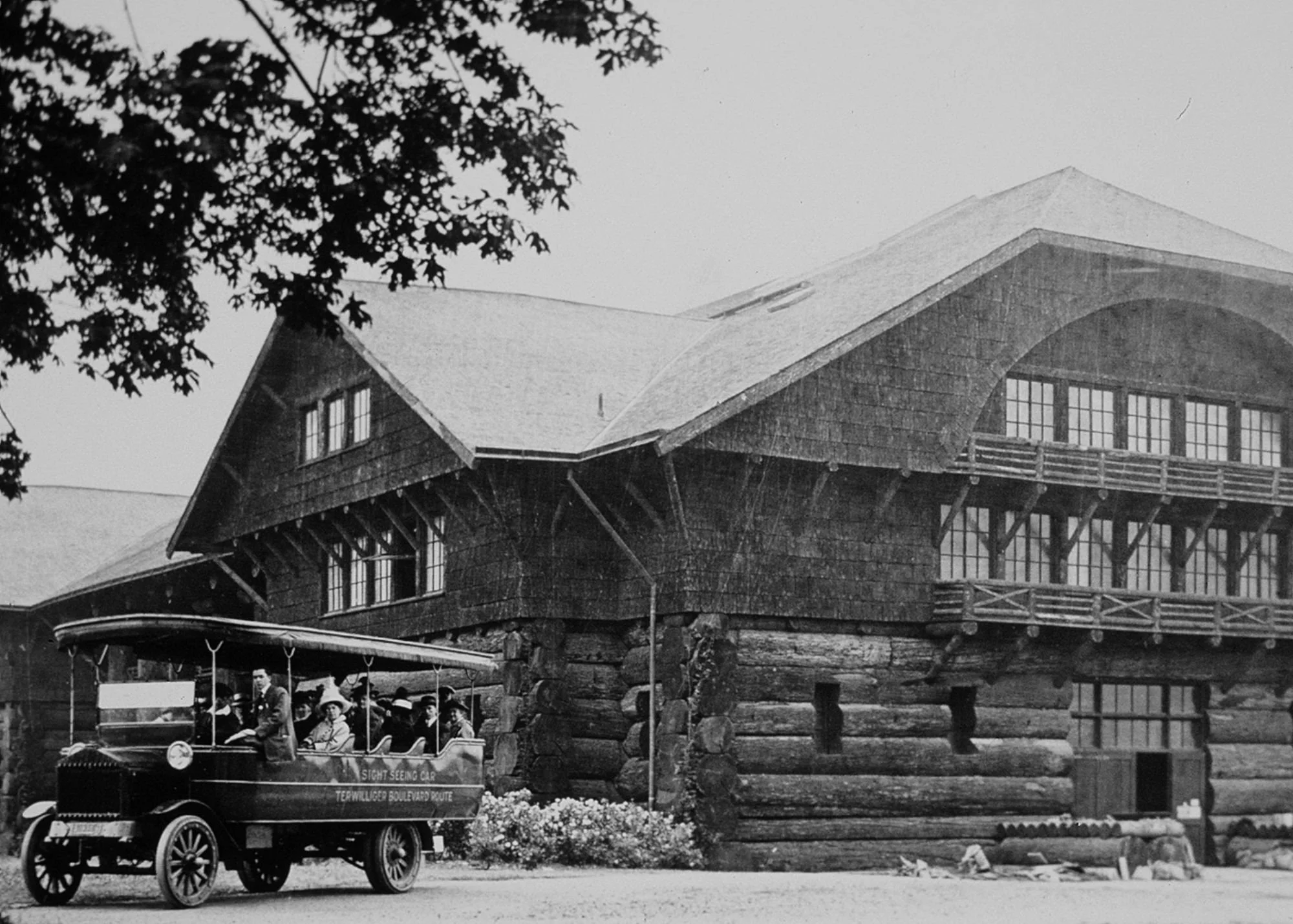
The World Forestry Center was founded in the early 20th century to educate the public about the importance of forests to the region’s economy, ecology, and culture. Its origins are tied to the 1905 Lewis and Clark Exposition, where a massive “world’s largest log cabin” Forestry Building helped cement Portland’s identity as a forest industry hub.
That original Forestry Building remained a landmark for decades after the exposition, serving as a public museum and gathering place until it was ultimately destroyed by a catastrophic fire in 1964. Following the fire, civic leaders rallied to continue its mission, and the organization that would become the World Forestry Center was formally established in 1966, carrying forward the educational work that the original building had housed.
In the wake of the fire, a new facility was built in Washington Park, opening in 1971 as the Western Forestry Center. This became the foundation for today’s campus, including the Discovery Museum and surrounding educational spaces.
Today, the World Forestry Center’s Discovery Museum continues that mission through interactive exhibits, educational programming, and partnerships that explore how forests are managed, conserved, and reimagined for the future, locally and around the world.