

Park History
Washington Park’s story stretches back more than 150 years. What began as a rugged, forested hillside on the edge of early Portland has grown into a 410-acre landscape of trails, gardens, museums, and cultural destinations. Its evolution reflects the city’s growth, shifting ideas about public space, and generations of caretakers who shaped the Park for learning, play, and connection.
From City Park to Washington Park
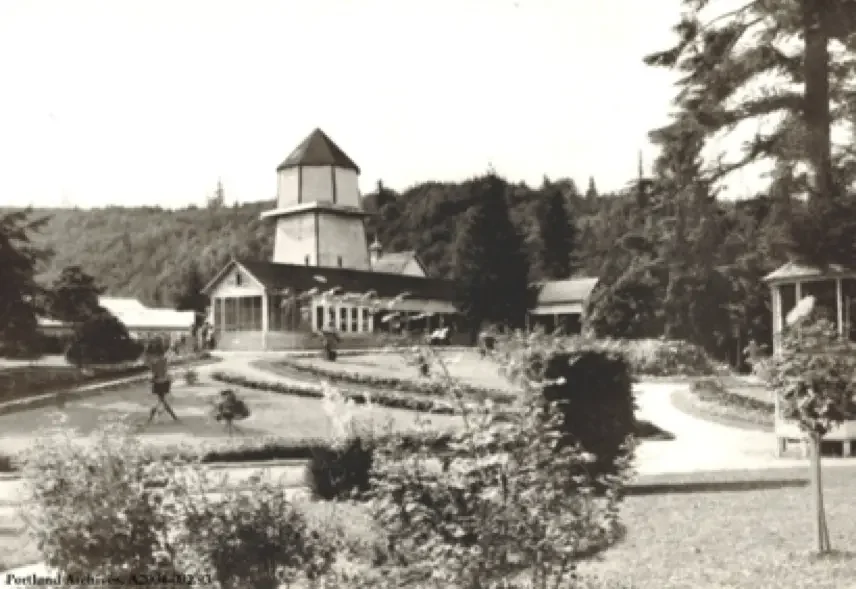
View of facilities in City Park (Washington Park), circa 1902 : A2004-002.93
In 1871, the City purchased the first 40 acres of what would become Washington Park from local developer Amos King. The land—thick with brush, trees, and even roaming cougars—was remote from downtown and difficult to access. Still, city leaders designated it “City Park,” laying the foundation for Portland’s earliest urban greenspace.
Little changed until the 1880s, when Charles M. Meyers was hired as the Park’s first keeper. A former seaman with no formal training, Meyers transformed the wilderness into a welcoming public park, drawing on the German and European landscapes he remembered from childhood. By 1900, the Park featured roads, trails, lawns, gardens, manicured hedges, flower beds, and even a small zoo. Cable cars arrived in 1890, making the once-remote area more accessible to residents.
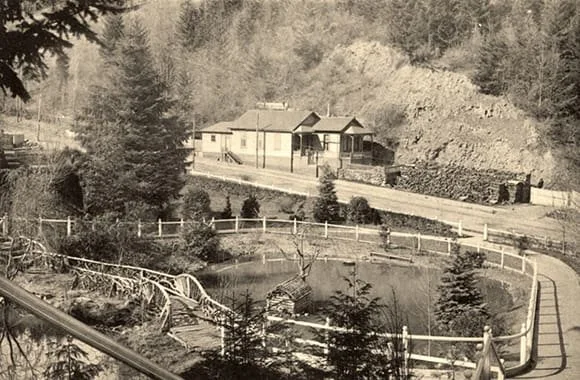
View of Washington Park from SW Washington Street entrance (City of Portland Archives) A2014-022-3593
In 1903, landscape architect John Charles Olmsted visited Portland and recommended several changes that would define the Park’s character for generations—separate roads and pedestrian paths, a more naturalistic planting style, and a new name. In 1912, City Park officially became Washington Park, reflecting its main entrance from SW Washington Street (now West Burnside).
Washington Park expanded significantly in 1922 when Multnomah County transferred 160 acres of the former Multnomah County Poor Farm to the City. Over time, this land became home to many of the destinations visitors enjoy today, including Hoyt Arboretum, the Oregon Zoo, the World Forestry Center, and what later became the Portland Children’s Museum.
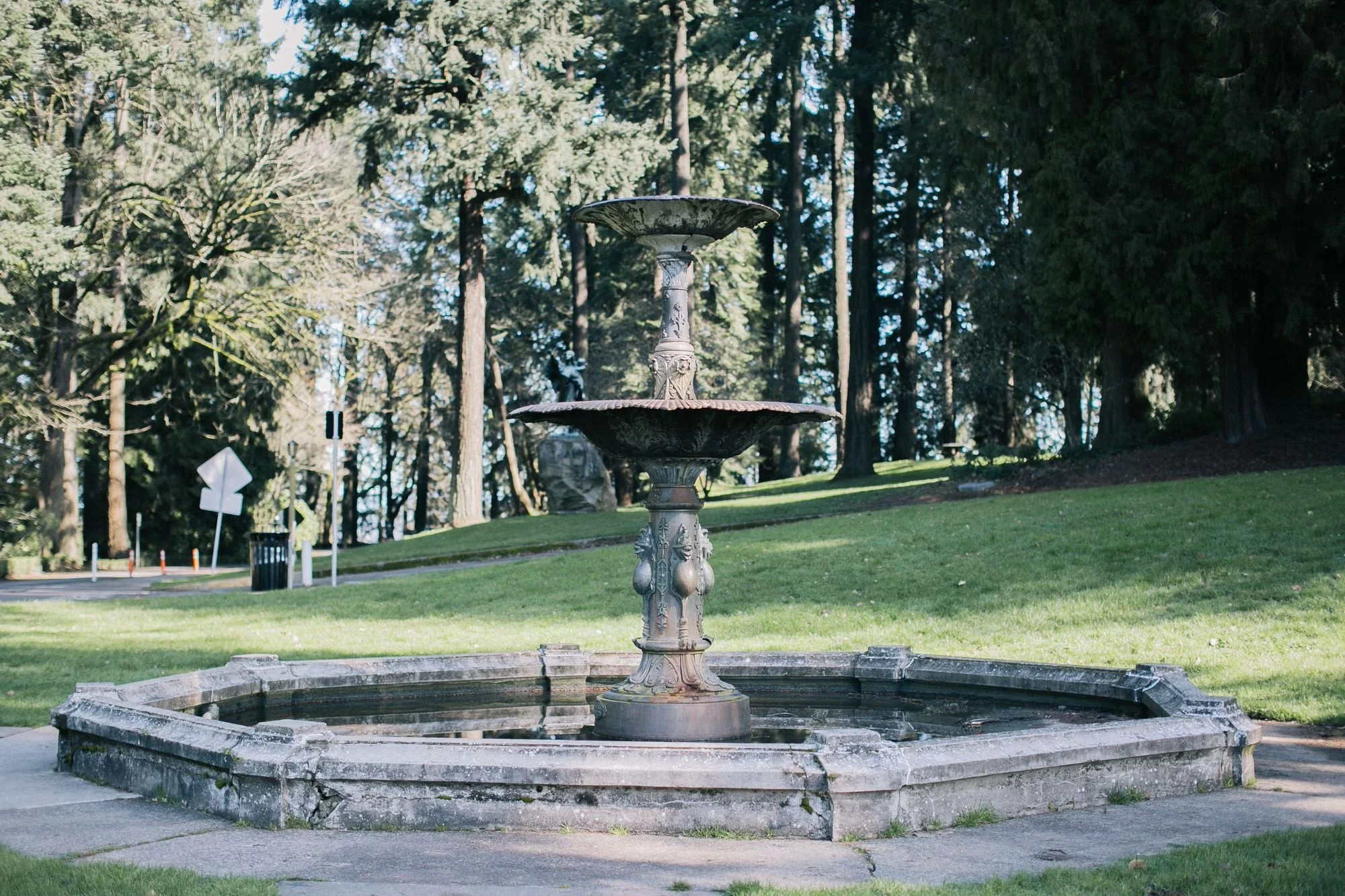
The Park’s earliest formal entrance sat at what is now Stearns Canyon, connecting early Portlanders to City Park’s northeastern edge. In 1941, the Loyal B. Stearns Memorial Fountain was added here in honor of Oregon judge Loyal B. Stearns. Today, the canyon remains an important pedestrian and bicycle route into the Park.
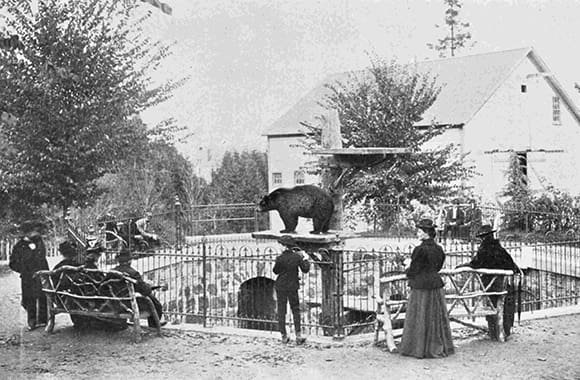
View of bear pit, Washington Park, circa 1910
Washington Park continued to grow throughout the 20th century, with new cultural institutions and gardens established across the landscape—from the International Rose Test Garden in 1917 to the Portland Japanese Garden in 1962. Modern connections arrived as well. In 1998, TriMet opened the Washington Park MAX Station, the deepest transit station in North America at 260 feet underground, offering direct, car-free access into the heart of the Park.
Today, Washington Park now spans more than 410 acres and includes over 15 miles of trails. Several connect to the 40-Mile Loop, linking the Park to Forest Park, Pittock Mansion, and Council Crest.
Washington Park Timeline
From a quiet 19th-century hillside to one of Oregon’s top destinations, Washington Park has continually adapted to meet the needs of its visitors. Its gardens, museums, memorials, trails, and gathering spaces reflect generations of stewardship—each layer adding to a landscape built for exploration, connection, and wonder. Here’s a brief look at more than 150 years of growth, stewardship, and community.
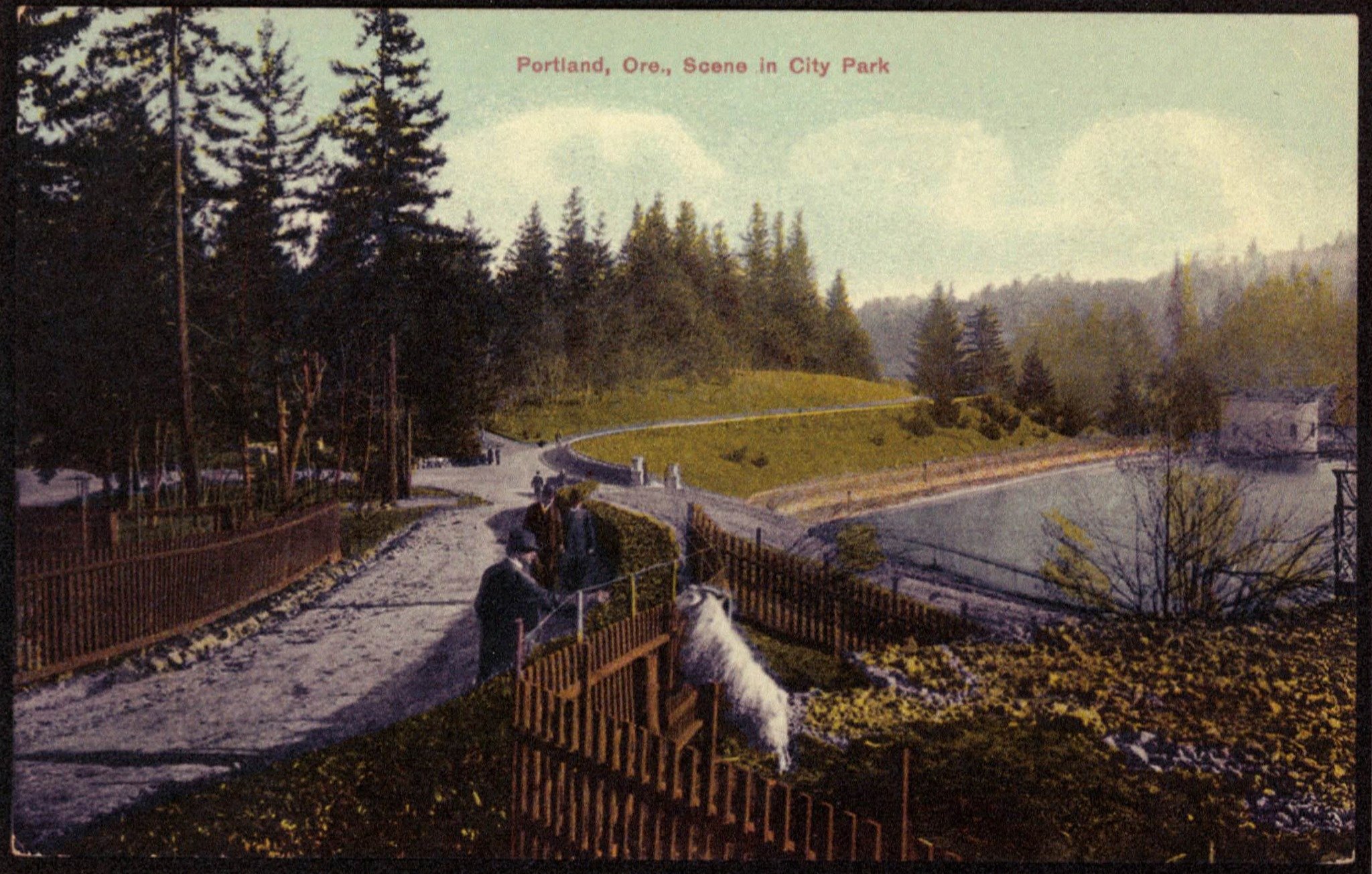
Washington Park Reservoir Postcard (1900s) - Early 1900s colorized postcard of Washington Park showing the reservoir, winding gravel paths, and visitors walking near a wooden fence with a goat
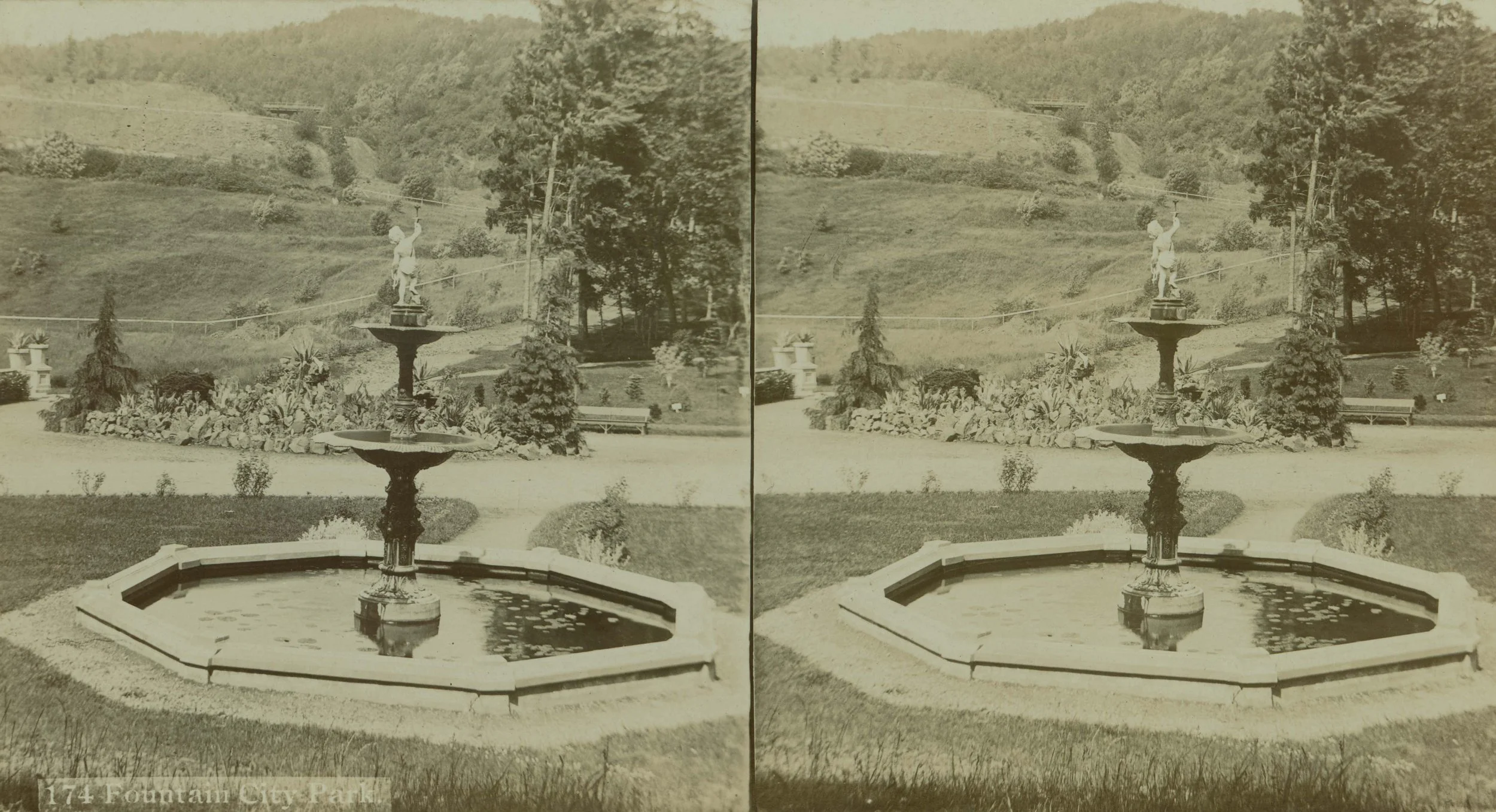
Chiming Fountain (A2004-002.6702) - Stereoview historical photo of an ornate tiered fountain in a stone basin set in a manicured garden, with a wooded hillside in the background
![City [Washington] Park bear pit 193 (A2004-002.857) - Black-and-white photo of a crowd of visitors looking down into a concrete bear pit at City Park, with vintage 1930s automobiles parked on the road above](https://images.squarespace-cdn.com/content/v1/690a792968875f1d40fb2629/f94c5c9a-102f-4ff9-a8ff-240a517fa2c0/City+Auditor+-+Archives+%26+Records+Management+-+Auditor+s+Historical+Records+-+A2004-002.857+++City+%5BWashington%5D+Park+bear+pit+193.JPG)
City [Washington] Park bear pit 193 (A2004-002.857) - Black-and-white photo of a crowd of visitors looking down into a concrete bear pit at City Park, with vintage 1930s automobiles parked on the road above
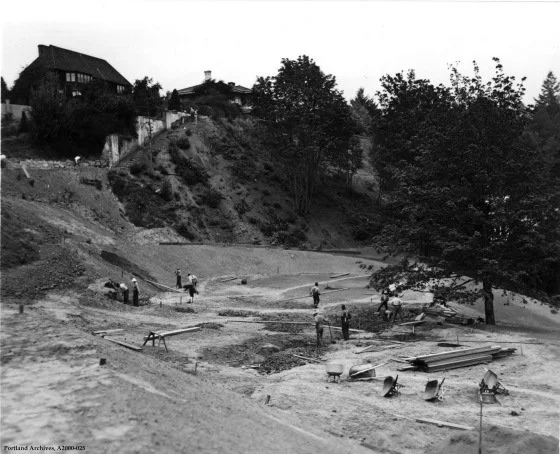
Public Works Relief Projects, Washington Park NE - Black-and-white photo of workers grading and constructing on a steep hillside in Washington Park, with a large craftsman-style house visible above
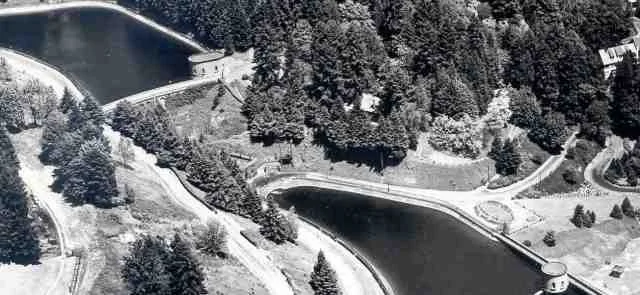
Washington Park Reservoirs - Black-and-white aerial photo of two Washington Park reservoirs and winding roads nestled within dense forest
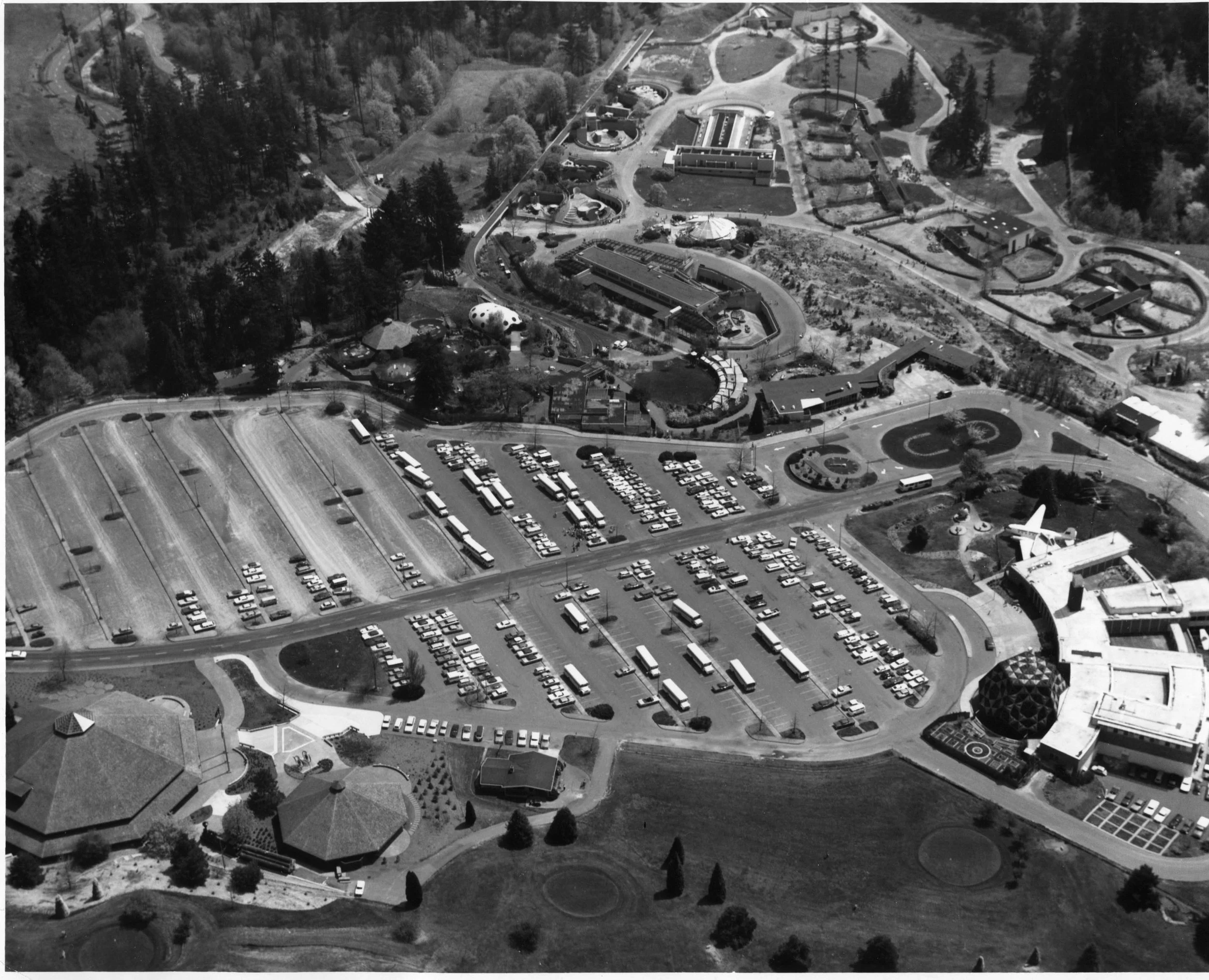
Mark Reed - Zoo & World Forestry Aerial (1970s) - Black-and-white 1970s aerial photo of the Oregon Zoo grounds, showing animal enclosures, winding paths, and a large parking lot

Mark Reed - Zoo & World Forestry Aerial (1970s) - Color 1970s aerial photo of the Washington Park zoo and World Forestry Center area, with a large parking lot filled with yellow school buses